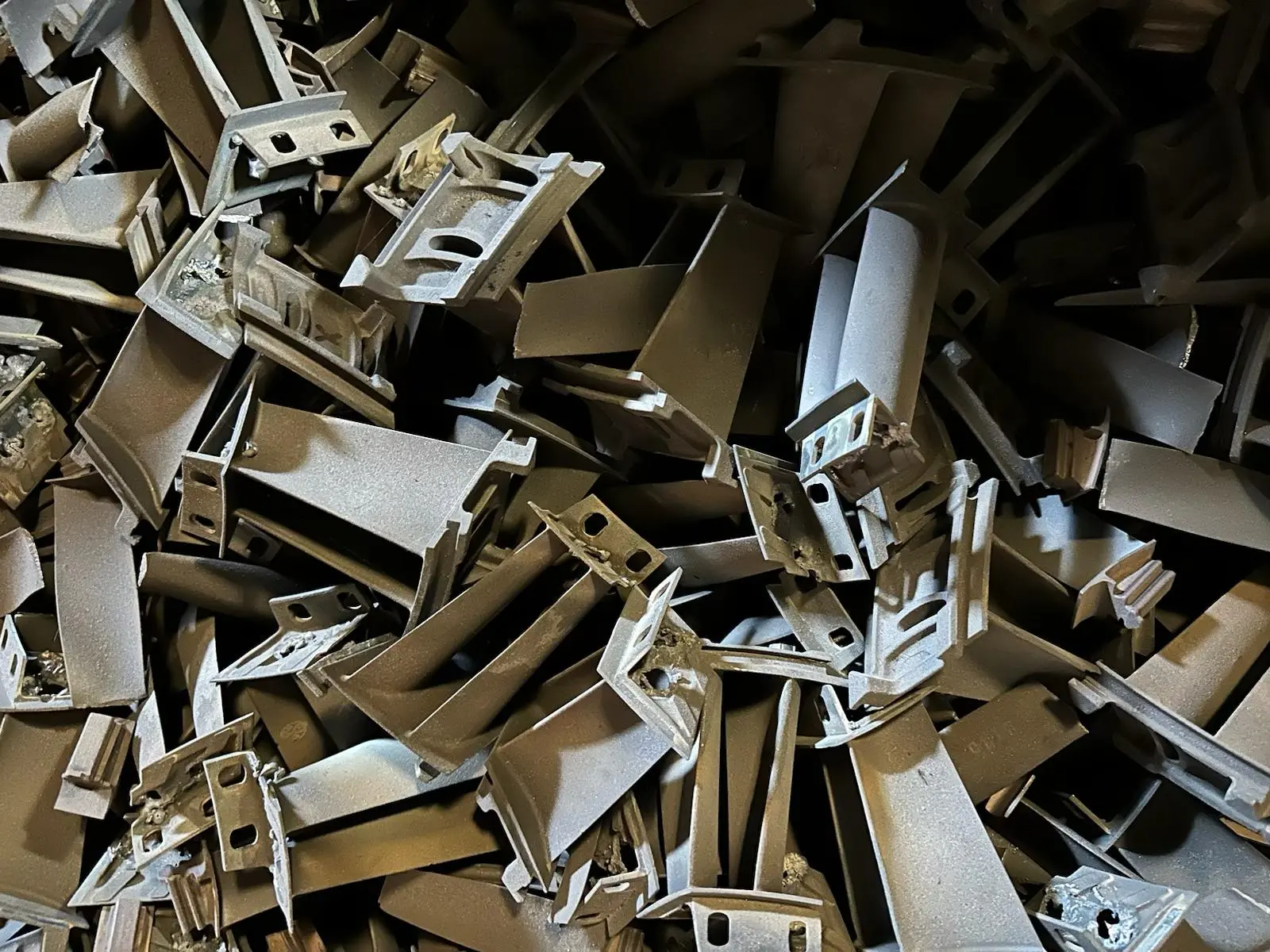
The term "black titanium mesh" appears frequently in electrochemical engineering, industrial maintenance, scrap recovery, and precious-metal refining. Although the phrase is widely used, it can be confusing about what the material actually is. In most cases, black or dark-grey titanium mesh is not simply titanium that has oxidized, corroded, or been anodized. Instead, the dark finish usually indicates a specialized mixed metal oxide (MMO) coating applied to a titanium substrate.
These coatings are commonly used on industrial anodes. They may contain ruthenium dioxide, iridium dioxide, tantalum oxide, tin oxide, or related metal oxides, depending on the intended application. Mesh used for chlorine generation often carries a ruthenium-containing coating, typically RuO₂ or a mixed RuO₂–IrO₂ layer. This matters not only for equipment performance but also for material valuation: the dark surface may contain recoverable platinum-group metals that make the mesh worth substantially more than ordinary titanium scrap.
Titanium itself is normally silver-grey in appearance. One of its defining properties is its ability to form an extremely thin, natural titanium dioxide film when exposed to oxygen, water, or many chemical environments. This passive titanium dioxide layer protects the metal from corrosion and is a major reason titanium is used in chemical processing, marine systems, and electrochemical equipment. However, naturally formed titanium dioxide is not the same thing as the dark surface found on an MMO anode. Titanium dioxide is largely electrically insulating, whereas an industrial anode surface must conduct electricity efficiently while catalyzing a specific reaction. A natural oxide film may protect titanium from attack, but it does not provide the performance required for chlorine generation, metal electrowinning, water treatment, or impressed-current cathodic protection.
In black titanium mesh used as an anode, titanium primarily serves as the substrate. It provides the electrode's physical framework: mesh shape, mechanical strength, corrosion resistance, and dimensional stability. The active electrochemical material is the coating bonded to the titanium surface.
The dark grey or black layer is typically a mixed metal-oxide coating. In chloride-based electrochemical systems, this coating often includes ruthenium dioxide (RuO₂) because ruthenium is highly effective at catalyzing chlorine evolution. Ruthenium is often combined with iridium dioxide to create a RuO₂–IrO₂ coating that balances catalytic activity with improved durability. The coating is usually very thin, often only a few micrometers thick. Typical coating thicknesses range from about 2 to 15 micrometers, depending on anode design and expected operating life. Although the coating is thin, it may cover a large surface area, especially on expanded titanium mesh, woven mesh, perforated sheet, or complex anode assemblies. As a result, the total amount of ruthenium, iridium, or other noble metals can still be commercially significant.
Manufacturers usually create these coatings through repeated application and thermal decomposition. They apply a solution containing metal precursors to prepared titanium, then heat it to elevated temperatures. Repeating this process builds the desired oxide layer. The finished coating has a dark, ceramic-like appearance and can exhibit a fine network of microscopic cracks, often called "mud-crack" morphology. These microcracks are characteristic of many thermally formed MMO coatings and can help accommodate stress between the titanium substrate and the oxide layer during service.
Ruthenium dioxide is especially important in electrochemical systems where chloride ions are present, and chlorine generation is the desired reaction. These include chlor-alkali plants, brine electrolysis systems, sodium hypochlorite generators, electrochlorination units, some swimming-pool chlorination systems, and water-treatment equipment. In these applications, the anode must efficiently convert chloride ions into chlorine or chlorine-containing oxidants. RuO₂ has exceptionally high catalytic activity for this reaction, reducing the electrical energy needed to operate the system. This is why ruthenium-based MMO anodes became an important alternative to older graphite- and lead-based electrodes.
Older electrode materials could erode, change shape, contaminate the electrolyte, or require frequent replacement. MMO-coated titanium anodes are known as dimensionally stable anodes because the titanium substrate retains its physical geometry over long operating periods. The active coating may eventually wear or deactivate, but the titanium base often remains intact enough for recovery or recoating. Not every black titanium mesh is ruthenium-coated. Mesh intended for oxygen evolution, particularly in acidic electrowinning or cathodic protection environments, may use an iridium-tantalum oxide coating instead. Iridium-based coatings are generally more stable where oxygen evolution dominates, while ruthenium-rich coatings are better suited to chloride-based chlorine-evolution duty.
New MMO-coated titanium mesh is often matte black, charcoal grey, dark grey, or brownish-black. The exact shade can vary according to coating chemistry, manufacturing method, surface preparation, thermal treatment, and operating history. A ruthenium-iridium oxide coating may look different from an iridium-tantalum oxide coating, but visual appearance alone cannot reliably determine the precise composition. Used mesh may look uneven because of mineral scale, salt deposits, oxidation products, chemical residues, or localized coating wear. Some portions may remain black, while other areas reveal silver-grey titanium beneath. This does not automatically mean the mesh lacks precious-metal value. A spent anode can still retain much of its original noble-metal coating even if it has failed electrically or shows visible areas of wear.
The most important practical point is that dark color is an indicator, not proof. Heat tint, process residues, or general contamination can also make titanium appear dark. Proper identification requires more than visual inspection.
Black titanium mesh is usually not black because titanium itself has oxidized into a useful conductive layer. In industrial electrochemical applications, the dark finish is more likely a mixed metal-oxide coating, often containing ruthenium dioxide or a ruthenium-iridium oxide combination. The titanium mesh provides a durable support structure, while the dark oxide layer provides the catalytic activity required for electrolysis.
Correct identification is essential. Service history, careful XRF screening, and laboratory analysis can help distinguish MMO-coated anode mesh from ordinary titanium because the coating may contain valuable platinum-group metals; never casually grind, spark-test, or mix the material with standard titanium scrap. What looks like ordinary black mesh may actually be a valuable industrial anode containing ruthenium or iridium.
Quest Metals purchases ruthenium-coated titanium mesh, MMO anodes, and other PGM-bearing industrial materials. If you have black titanium mesh from chlor-alkali, electrochlorination, plating, water treatment, or cathodic-protection equipment, preserving the material and obtaining a professional evaluation can help ensure it is valued for its recoverable precious-metal content rather than sold as ordinary titanium scrap.