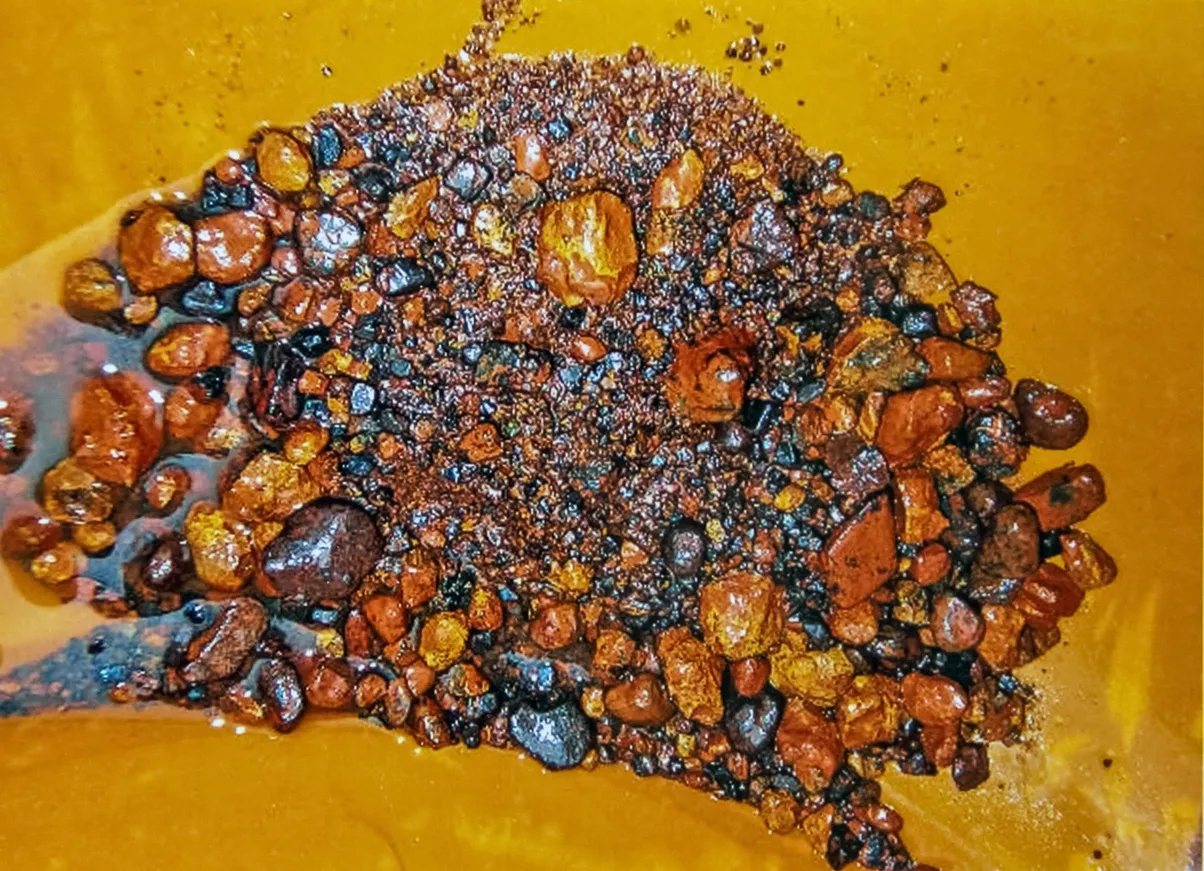
In an era where technological innovation drives global progress, the control over critical minerals, especially rare earth elements, has become a strategic asset. This week's flurry of international agreements reflects a mounting urgency among Washington and its allies to diversify supply chains away from China, the undisputed leader in rare earth processing. At the heart of the latest developments are high-stakes deals signed between the United States, Japan, Australia, and several Southeast Asian nations, aiming to reshape the global mineral economy and reduce geopolitical vulnerabilities.
During President Donald Trump's visit to Tokyo, the United States and Japan signed a comprehensive agreement aimed at securing the supply of critical minerals and rare earths. With China tightening controls on exports and dominating over 70% of global processing capacity, Washington and Tokyo are seeking to build resilience through cooperation.
The joint agreement involves identifying gaps in mineral supply chains specifically for materials essential to clean energy, high-tech manufacturing, and defense, including permanent magnets, batteries, catalysts, and optical components. Furthermore, the two allies committed to mobilizing private and public sector investment, coordinating stockpiles, and establishing a Rapid Response Group to mitigate supply shocks.
This alignment mirrors recent moves by the US in Southeast Asia, where leaders from Malaysia, Thailand, Vietnam, and Cambodia agreed to enhance American access to these indispensable resources. While many of these agreements are non-binding, they signal a growing shift in the geopolitical landscape of mineral sourcing.
Further underscoring Washington’s strategic ambitions, President Trump and Australian Prime Minister Anthony Albanese signed a $3 billion critical minerals agreement in Washington that promises to supercharge investment into the sector. Australia, already the world’s leading exporter of hard-rock lithium and a major source of rare earths, is being positioned as a key linchpin in an alternative supply chain.
Yet, questions loom about the feasibility of this vision. Legal, environmental, and economic obstacles remain formidable. Australia has only two operating rare earth mines, and most ore is shipped abroad for processing, primarily to China. Developing domestic downstream capabilities is expensive, hampered by a shortage of skilled labor, high energy costs, and community resistance. Environmental impacts are also a major concern. Processing rare earths involves toxic and radioactive byproducts. China, which cornered the global market partly due to its willingness to absorb these environmental costs, has acknowledged that its dominance has created "cancer villages," with staggering clean-up bills. Australia's strict environmental regulations add another layer of complexity.
Alcoa’s planned gallium refinery in Western Australia has faced local backlash, with critics citing threats to forests, farmland, and endangered ecosystems. As scientists warn about irreversible damage, Canberra finds itself navigating a difficult balance between economic opportunity and environmental sustainability.
While headlines trumpet these deals as breakthroughs, the economics remain sobering. Developing a rare earth supply chain is capital-intensive, slow, and uncertain. It can take up to 10 years from exploration to production, and even recent expansions in lithium supply have triggered price crashes, putting projects on ice.
Moreover, who exactly will buy these minerals at a scale that sustains billion-dollar investments? Defense demand is marginal, and the real money lies in civilian markets, electric vehicles, batteries, and wind turbines, where China controls production and pricing. Unless governments help underwrite long-term offtake agreements, many of these ambitious plans risk stalling.
Experts argue that Australia’s pact with the US, while serving American strategic interests, largely amounts to a subsidy for an industry that lacks commercially viable markets outside of China. With taxpayer dollars on the line, Canberra faces increasing scrutiny over returns on investment.
Perhaps the most underappreciated region in this global realignment is Southeast Asia. Nations like Indonesia, Malaysia, and Thailand are rapidly building EV component manufacturing and refining capacity. With rising domestic demand and extensive Chinese and Japanese investment, this region is emerging as a promising third front in the critical minerals race.
Analysts suggest that Australia should pivot towards a broader ASEAN-centered critical minerals pact, which would be built on four interlinked pillars. The first pillar is the establishment of a guaranteed collective offtake, involving pre-arranged purchase agreements with ASEAN end-users, such as battery and electric vehicle manufacturers, to ensure a stable and predictable demand for critical minerals.
The second pillar emphasizes the development of a shared processing network. This involves creating a distributed refining ecosystem that is tailored to leverage local strengths in areas such as cost, skills, and infrastructure, promoting efficiency across the region. Next, the third pillar calls for a common rule book, which would unify environmental and safety standards. This would be essential for establishing traceable and sustainable supply chains that can be relied upon by all parties involved.
Lastly, the fourth pillar proposes the establishment of risk-sharing finance through a joint financial facility. This would help to de-risk projects and encourage the influx of private capital, thus enhancing investment in the sector.
By moving towards this framework, Australia can foster a partnership with ASEAN that offers strategic diversification and mitigates politicization. This approach would also reduce China’s capacity to control supply chains through mechanisms like embargoes or restrictions.
Still, China remains an indispensable player. Chinese firms dominate global standards, technologies, and processing. Any credible supply chain, especially one targeting affordability and environmental mitigation, will need to collaborate with, or at least borrow lessons from, Beijing’s decades-long head start in this field.
The recent cascade of agreements underscores a new era of “resource diplomacy.” As the world pivots towards green energy, artificial intelligence, and advanced manufacturing, the strategic value of rare earths has never been higher. But strategic intent must be matched with market realism, environmental responsibility, and regional cooperation.
The US, Japan, and Australia may be trying to redraw the global rare earth map, but the destination remains uncertain. Creating secure, sustainable, and commercially viable mineral supply chains will require not only investment and coordination but political will, innovation, and time. For now, China remains the dominant force, and everyone else is playing catch-up.