The pact, reported on February 18 and subsequently updated, establishes a “Joint Investment Framework” between Uzbekistan and the U.S. International Development Finance Corp (DFC). On paper, it is an investment vehicle: a framework to prioritize financing across the critical mineral value chain, including exploration, extraction, and processing, and to propose a new U.S.–Uzbekistan Joint Investment Holding Company to channel future minerals and infrastructure projects.
In practice, it is also a signal. For Washington, it is part of President Donald Trump’s broader push to counter China’s dominance in critical resources and their supply chains. For Tashkent, it is a bid to attract capital and technology while diversifying strategic partnerships beyond the region’s traditional power brokers, Russia and China.
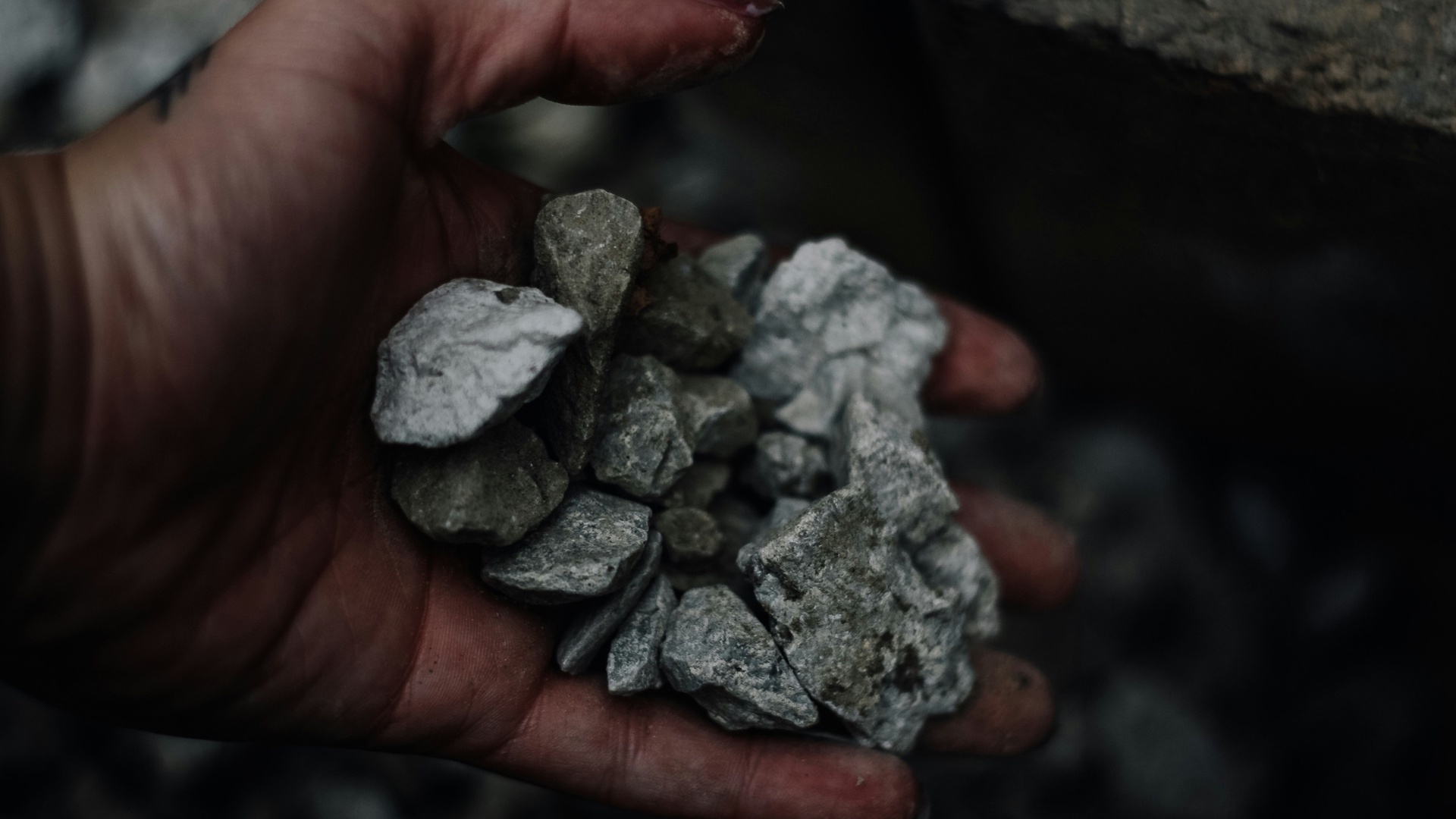
Uzbekistan is not new to mining. The country hosts Muruntau, often described as the world’s second-largest gold mine, which is operated under the umbrella of state-linked industry and is emblematic of a sector where geology and political economy have long been intertwined. Beyond gold, Uzbekistan holds significant reserves of uranium and copper, and it has “significant untapped reserves” of critical minerals such as lithium and tungsten, which sit at the heart of modern technology and defense-industrial supply chains.
That combination helps explain the timing. Since Trump’s return to power, the U.S. has “courted the five former Soviet republics of Central Asia,” seeking to bolster influence in a region where Russia and China have traditionally enjoyed primacy. Trump hosted Uzbek President Shavkat Mirziyoyev alongside the leaders of Kazakhstan, Kyrgyzstan, Tajikistan, and Turkmenistan at the White House in November. Earlier this month, a separate minerals summit produced initial memorandums of understanding on critical mineral supplies with 11 countries, including Uzbekistan.
The Uzbek side also has reasons to engage. Mirziyoyev has pursued an economic reform program since taking office in 2016, positioning Uzbekistan as Central Asia’s second-largest economy and home to nearly 40 million people as a state seeking growth through investment, modernization, and greater global integration. His presence in Washington for the inaugural meeting of Trump’s “Board of Peace,” which he has joined, underscores how Tashkent is tying economic outreach to broader diplomatic positioning.
One of the most consequential elements of the announcement is not only its content but also its leadership. The agreement highlights the DFC’s growing role as a key instrument in Trump’s strategy: Reuters notes the agency already plays a significant part in a Ukraine minerals deal struck last year and is spearheading projects in several resource-rich African countries.
This points to an evolution in U.S. statecraft. Rather than relying primarily on trade policy or traditional diplomacy, Washington is leaning on development-finance tools to shape supply chains. That approach can be attractive to partner countries because it frames cooperation as investment and industrial development rather than simply extraction. Yet it also raises the stakes: if the DFC becomes a central channel for strategic minerals, its project selection, risk tolerance, and transparency standards will effectively become part of U.S. foreign policy by other means.
The framework’s emphasis on the entire value chain, especially processing, is politically loaded. China’s advantage in critical minerals is not just about access to ore bodies; it is widely understood to be about midstream capacity: refining, processing, and industrial ecosystems that turn rocks into usable inputs for manufacturing.
By explicitly prioritizing processing alongside exploration and extraction, the U.S.–Uzbekistan framework aims to avoid a familiar trap for resource states: exporting raw or semi-processed material while importing higher-value manufactured goods. For Uzbekistan, local processing could mean more jobs, a larger tax base, and greater leverage. For the United States, it means the possibility, over time, of a supply chain less exposed to chokepoints dominated by competitors.
Still, moving from intent to industrial reality is difficult. Processing requires reliable power, water, specialized reagents, skilled labor, and regulatory credibility. Uzbekistan can offer geology and reform momentum, but building a competitive processing industry is a multi-year undertaking even under ideal conditions.
The agreement lands in a region where economic logic and geopolitical gravity do not always align.
Russia and China have long been central to Central Asia’s security and commerce, and both have deep relationships across the region. A more visible U.S. role in strategic sectors may give Uzbekistan added bargaining power, yet it may also complicate Tashkent’s efforts to maintain a pragmatic “multi-vector” foreign policy. In Central Asia, partnerships are rarely exclusive, and governments often calibrate engagement to avoid being seen as choosing sides.
That is why the agreement’s structure matters. A “Joint Investment Framework” and a proposed holding company can be presented as commercially oriented rather than militarized or ideological, potentially lowering the political temperature. But in an era when critical minerals are explicitly treated as strategic assets, even nominally commercial investments can be interpreted through a security lens.
Governance and public trust pose significant challenges, as large mining and infrastructure projects often face heightened scrutiny over licensing, revenue allocation, and environmental management. If there are no visible safeguards in place, the development of resources may provoke domestic backlash, even if it improves macroeconomic indicators. Additionally, while pushing for critical minerals could strengthen Uzbekistan’s economy, it also carries the risk of deepening the country’s vulnerability to global price fluctuations if diversification remains limited. Furthermore, new transport and energy projects associated with mining could prove beneficial; however, they may also lock Uzbekistan into specific export corridors and counterparties for decades, restricting future economic flexibility.
These considerations weigh on the United States as well. The agreement provides a new avenue in a broader strategy aimed at securing better access to critical minerals and reducing dependence on adversarial or unstable supply lines. However, Washington must navigate practical challenges and reputational risks, as projects can encounter delays, communities might resist development, and anticipated economic benefits may not materialize. If initiatives backed by the U.S. are viewed as extractive rather than developmental, they risk mirroring criticisms often aimed at other major powers’ economic engagements.
Key indicators will play a crucial role in determining the future of the partnership between Uzbekistan and the U.S. Firstly, it is essential to establish the governance and actual formation of the holding company involved in this initiative. Additionally, the focus must shift beyond mere extraction; significant investment should be directed towards enhancing processing capacity. High standards will be necessary for the projects, particularly concerning environmental safeguards, labor practices, transparency, and the impact on local communities.
Moreover, how Uzbekistan navigates its external relationships will be pivotal. It will need to find a balance that allows for engagement with both Russia and China while fostering deeper ties with the United States. Understanding the U.S.–Uzbekistan pact requires viewing it not as an isolated transaction but as a component of a rapidly evolving framework of “strategic finance,” in which development funding, industrial policy, and geopolitics intersect. Given Uzbekistan’s wealth of minerals, including gold, uranium, and copper, as well as its potential reserves of lithium and tungsten, it stands out as an attractive partner. The challenge lies in whether both parties can transform this interest into sustainable supply chains and mutual economic benefits, all while avoiding the scenario of the country becoming another battleground for great-power rivalry.