While global attention is fixed on the US-Israel war with Iran and the resulting surge in oil prices, another conflict with major implications for commodity markets is unfolding more quietly in Central Africa. There, the Trump administration has stepped up pressure on Rwanda and the Democratic Republic of Congo, seeking to stabilize one of the world’s most strategically important mineral regions.
At first glance, Washington’s intervention appears aimed at peace. Last week, the US sanctioned Rwanda’s army and senior officials for supporting rebels in eastern Congo, sending its clearest signal yet that the White House expects Rwanda to honor the fragile peace agreement Trump helped broker last year. Trump has said he wants the long-running conflict in eastern Congo, one that has persisted in different forms for roughly three decades, to end.
But the US push is about far more than diplomacy. The DRC sits atop some of the world’s richest deposits of copper and cobalt, minerals essential to electric vehicles, semiconductors, battery storage, and broader clean energy supply chains. As the global race for critical minerals intensifies, Washington is making a late but increasingly forceful attempt to reclaim ground it has long ceded to China.
Trump’s Congo strategy rests on a direct linkage: peace in eastern DRC in exchange for expanded American access to strategic minerals. This approach was formalized in December through a US-mediated peace accord between Rwanda and the DRC, signed alongside bilateral minerals agreements with both countries.
In Trump’s view, ending insecurity in the region could unlock billions of dollars in American investment in mining and infrastructure. For US companies, however, such investment will only materialize if the peace deal holds. Eastern Congo remains one of Africa’s most volatile regions, and no investor will commit large sums without at least a basic level of political and security stability.
There are signs that Washington’s strategy is gaining traction. In February, a consortium including New York-based Orion Resource Partners and the US Development Finance Corp. agreed to a multibillion-dollar deal to acquire 40% of Glencore’s majority stakes in two Congolese copper-cobalt mines. Meanwhile, Virtus Metals, a company run by US military veterans, had an offer accepted for another producer in the country. These moves suggest that US capital is no longer merely exploring Congo’s resource sector from afar. It is moving in.
The broader objective is unmistakable: reduce dependence on China. At the US-hosted Critical Minerals Ministerial in Washington on Feb. 4, officials from more than 50 countries gathered to discuss supply chain security. Several African countries, including Guinea, Morocco, Rwanda, and the DRC, either signed or deepened agreements with the US. Secretary of State Marco Rubio, without explicitly naming China, warned that the global supply of critical minerals is dangerously concentrated “in the hands of one country,” creating a geopolitical vulnerability.
That concern is well-founded. According to the International Energy Agency, China dominated global processing of copper, lithium, cobalt, graphite, and rare earths in 2024. The issue is not just access to raw minerals but control over the refining and processing capacity that turns them into usable industrial inputs.
Washington is now trying to build an alternative system. Trump’s newly launched Vault project aims to create a US strategic reserve of critical minerals, backed by an initial financing package through EXIM Bank. At the same time, the US is backing infrastructure such as the Lobito Corridor, the rail and logistics route linking Angola’s Atlantic coast with the copper and cobalt belts of the DRC and Zambia. The goal is to move African minerals westward into US-aligned supply chains, rather than eastward through Chinese-controlled networks.
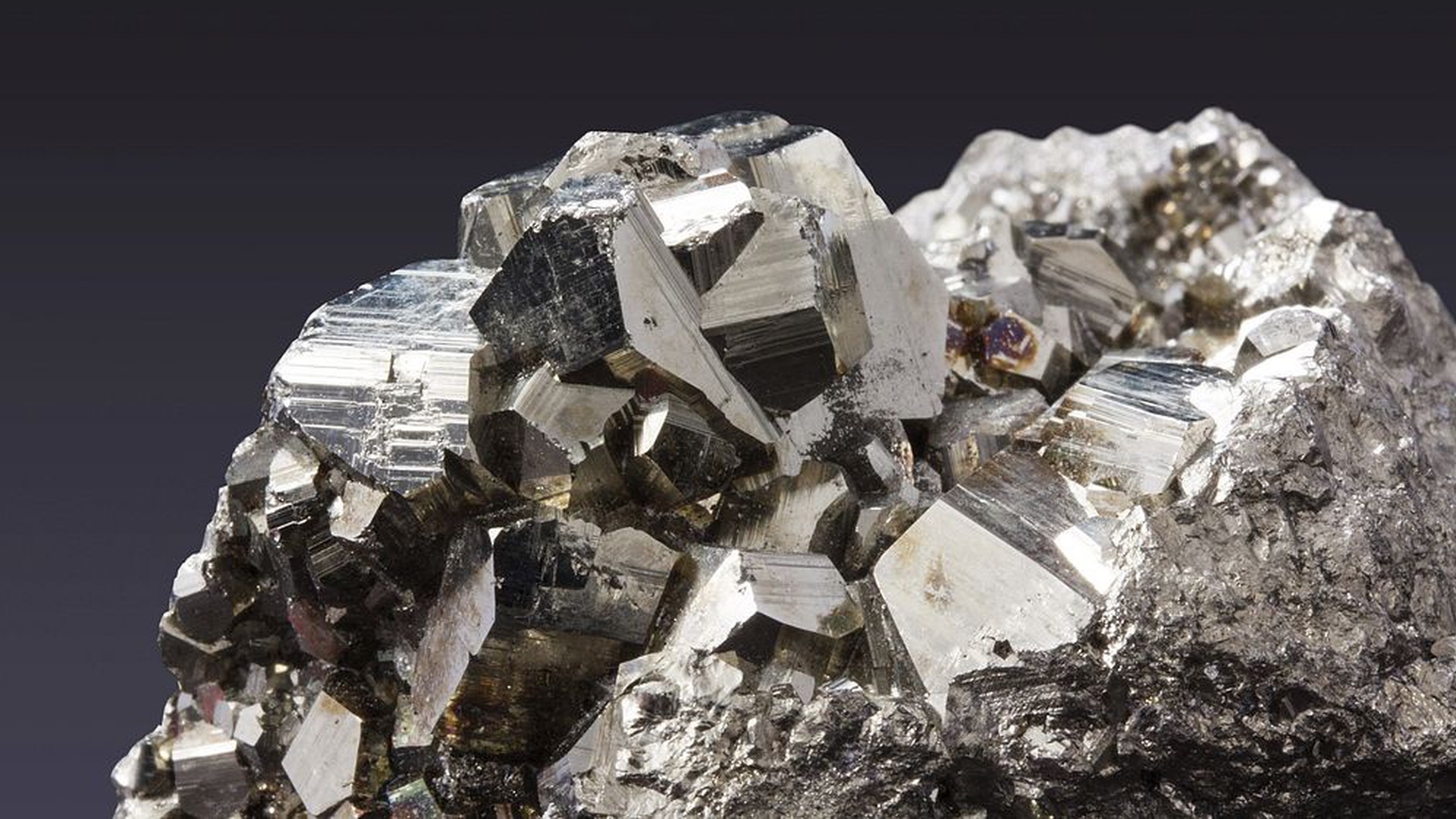
The DRC is central to this effort because of its extraordinary mineral wealth. It holds more than 70% of the world’s known cobalt reserves, and its broader mining potential is immense. Congolese officials estimate that more than 90% of the country’s mining resources remain untapped, with a notional value exceeding $25 trillion.
That makes Congo indispensable to the energy transition and to the geopolitical competition surrounding it. Yet the very logic behind the US strategy is also what makes it controversial. Critics argue that Washington is not so much building peace as securitizing access to minerals. In their view, the DRC is being drawn into a great-power contest in which local communities bear the risks while foreign governments and companies capture the gains.
These concerns are no longer theoretical. Congolese civil society groups, lawyers, and human rights defenders have challenged the legitimacy of the US-DRC minerals deal in court. They argue that because the agreement may affect national law, it should have been approved by parliament or submitted to a referendum. Without that process, they say, the deal violates the Constitution.
Others object to the substance of the agreement itself. Jean-Claude Mputu, a spokesperson for the civil society coalition Le Congo n’est pas à vendre (“Congo is not for sale") has criticized the deal as a mineral grab carried out with little transparency and virtually no guarantees on human rights, justice, or environmental protection.
That criticism goes to the heart of a long-standing African dilemma: the continent supplies the raw materials for global technological transformation but too often captures little of the value. The fear is that the US push, like previous extraction booms, may deepen that pattern rather than correct it.
There is also a simpler problem: the security bargain itself may be failing. Despite the signing of the peace accord, hostilities in eastern Congo have continued. M23 rebels, allegedly backed by Rwanda, remain active, and attacks have spread beyond North Kivu into other provinces. Drone strikes near Kisangani earlier this year highlighted how quickly instability can move.
That raises a difficult question: can peace really be built on the promise of foreign commercial investment? For the Congolese government, the answer appears to be yes, or at least worth the gamble. President Félix Tshisekedi has effectively wagered that closer alignment with Washington can bring security support, diplomatic leverage, and investment. But if violence persists, the strategy may leave Congo with access to valuable resources conceded without gaining lasting stability.
Beijing is not treating these developments lightly. Chinese analysts and investment observers increasingly describe US-DRC mineral deals as the first serious challenge to China’s dominance in Africa’s critical minerals sector.
Some warn of an emerging “structural deficiency” in cobalt supply if US-backed deals divert output away from Chinese supply chains. Others urge Chinese firms to accelerate diversification, particularly through Indonesia, or to involve Gulf capital from Saudi Arabia and the UAE in new African mining ventures. At the same time, Chinese commentators remain confident that the country’s biggest advantage, its massive refining and processing base, will be difficult to dislodge.
That confidence is not misplaced. China spent years building mineral processing infrastructure, often at great cost and with low short-term returns. Many analysts doubt US or European firms will tolerate the same losses, especially while prices for key minerals such as cobalt and nickel remain weak. In other words, even if Washington can secure more raw material upstream, China may continue to dominate the downstream stages where much of the real strategic power lies.
All of this is happening against a backdrop of wider commodity turmoil. Oil prices have jumped sharply amid war in the Middle East, rattling African economies dependent on imported fuel. South Africa is monitoring markets after a severe bond selloff, Kenya is tracking vital fuel shipments through the Red Sea, and inflation concerns are mounting across the continent.
That context matters. It underscores how quickly commodity disruptions can cascade into broader economic and political crises. The lesson, as history has repeatedly shown since the 1973 oil shock, is that struggles over energy and raw materials rarely remain confined to markets. They shape foreign policy, domestic stability, inflation, and state power. The competition over Congo’s minerals belongs squarely in that tradition.
The US critical minerals drive in Africa is being presented as a strategy for supply chain security, regional peace, and mutual economic benefit. It may indeed open new investment opportunities, reduce Western dependence on China, and give African producers greater geopolitical leverage by creating competing suitors for their resources. If these agreements do not include enforceable protections for labor rights, environmental standards, transparency, and local value addition, then Africa may once again provide the minerals for someone else’s industrial future without sharing meaningfully in the rewards.
The DRC, above all, is now at the center of a new global contest, one that links war, diplomacy, and mineral extraction more tightly than ever. Trump’s intervention may yet help calm one of Africa’s deadliest conflicts. But if peace is treated primarily as a gateway to access to resources, it risks proving both fragile and deeply unequal. The end of war, if it comes, will not be measured simply by the silencing of guns. It will be measured by whether Congo’s mineral wealth finally delivers security, accountability, and prosperity for the people living atop it.