Economic Accessibility and Applications
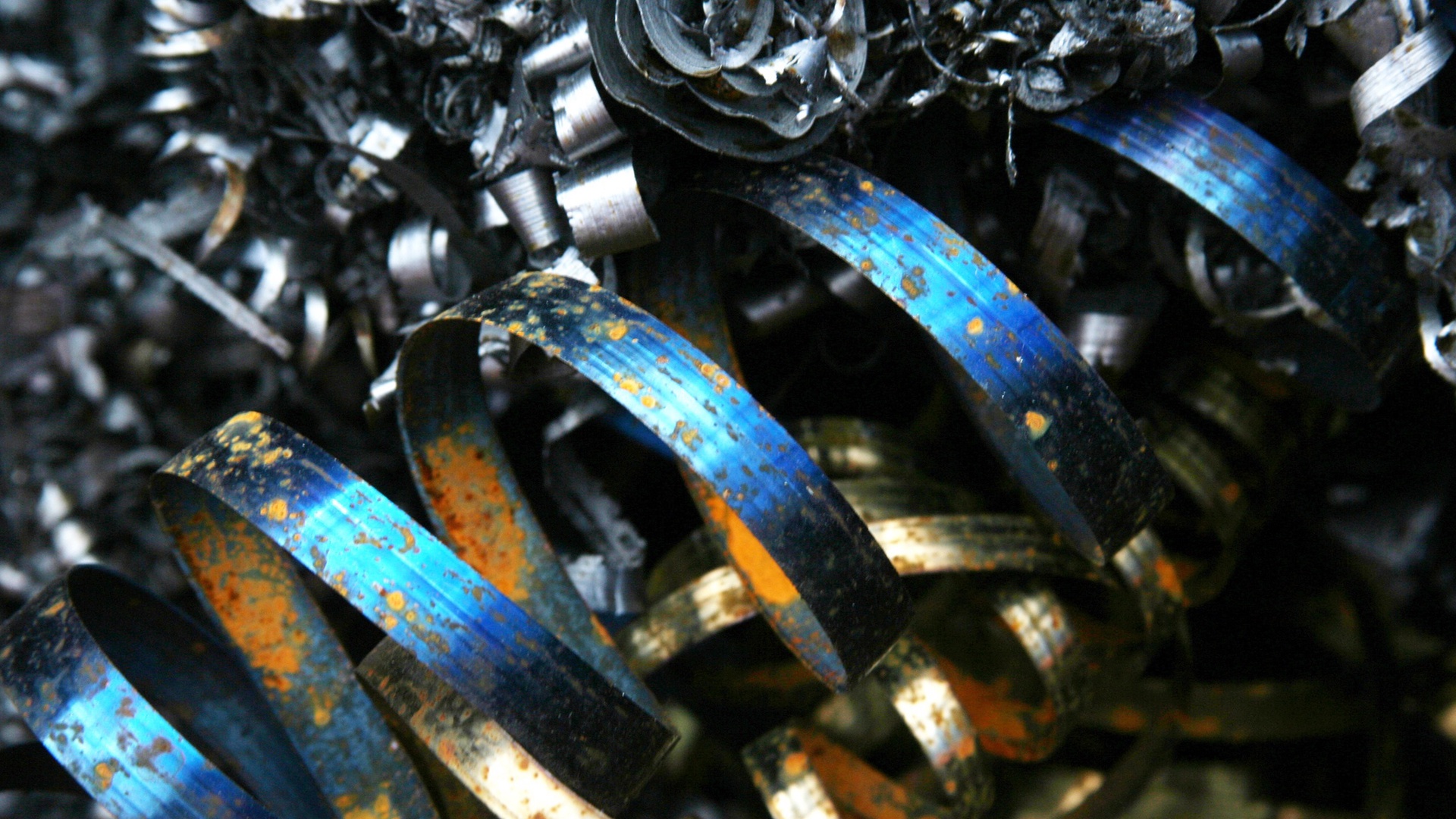
Over the past five years, the price of commercially pure titanium has dropped by nearly 30%, making titanium and its alloys more economically accessible. Titanium alloys are valued for their exceptional physical properties, including light weight, high mechanical strength, and resistance to extreme temperatures, as well as their chemical properties, such as resistance to electrochemical corrosion and biocompatibility. These attributes make titanium indispensable in various sectors, including:
-
Aerospace and Aeronautics: Titanium is widely used in engines, airframes, missiles, and spacecraft due to its low density and high strength-to-weight ratio. Its corrosion resistance also makes it suitable for marine and naval applications, as well as in seawater-cooled power plant capacitors.
-
Medical Applications: Titanium is used in MRI magnets and as structural prostheses due to its biocompatibility and mechanical properties.
-
Industrial Uses: Titanium is also employed in the petroleum, paper, and pulp industries, as well as in nitric acid plants and certain organic synthesis processes.
Economic Importance and Uses
Ilmenite is economically significant because it is used to produce titanium dioxide pigments. Its magnetic properties, along with those of ilmenite-hematite solid solutions (Fe₂O₃), are crucial for commercial extraction through magnetic separation.
Titanium Resources and Deposits
Titanium is extracted from minerals like ilmenite (FeTiO₃) and rutile (TiO₂), which are the primary sources of titanium for industrial use. With a global reserve estimated at 650 billion metric tons of titanium oxide, the potential for titanium production is vast. Major deposits of ilmenite and rutile are found in countries such as:
Ilmenite, discovered in 1827 by Adolph Theodor Kupffer, is a significant mineral containing 40–65% titanium dioxide and 35–60% iron oxide [20]. It is particularly valued for its role in producing titanium dioxide pigments and its magnetic properties, which are crucial for commercial extraction processes.
Production Methods
The current dominant method for producing titanium metal is the Kroll process, developed by DuPont Germany in 1948. This process is energy-intensive and costly, prompting researchers to seek alternative methods despite its established use. The Kroll process involves reducing titanium tetrachloride (TiCl₄) with magnesium, yielding titanium metal and magnesium chloride.
Two primary approaches for titanium metal production are the following:
-
Electrochemical Methods: One notable example is the Fray, Farthing, and Chen (FFC) process, which uses electrolytic reduction of titanium oxide. This method is still under development but holds promise for future advancements.
-
Thermochemical Methods: The Kroll process is a well-known thermochemical method that remains commercially viable for primary titanium production today.
Additionally, innovations in powder production and the use of advanced technologies, such as genomic data and computer-assisted analysis, are shaping the future of titanium manufacturing.
References
- Mutava, T.D. Characterization of a Titanium Precursor Salt and Study of Some of the Treatment Steps Used for the Extraction Process. Ph.D. Thesis, University of the Witwatersrand, Johannesburg, South Africa, 2009.
- Berthaud, M. Étude du Comportement de L’alliage de Titane Ti6242S à Haute Température sous Atmosphères Complexes: Applications Aéronautiques. Ph.D. Thesis, Université Bourgogne Franche-Comté, Besançon, France, 2018.
- Samal, S. Thermal Plasma Processing of Ilmenite; Springer: Berlin/Heidelberg, Germany, 2017.
- Froes, F. Titanium: Physical Metallurgy, Processing, and Applications; ASM International: Novelty, OH, USA, 2015.
- Nagesh, C.R.; Ramachandran, C.; Subramanyam, R. Methods of titanium sponge production. Trans. Indian Inst. Met. 2008, 61, 341–348.
- Vilakazi, A.Q. Hydrometallurgical Beneficiation of Ilmenite. Ph.D. Thesis, University of the Free State, Bloemfontein, South Africa, 2017.
- Wilson, N.C.; Muscat, J.; Mkhonto, D.; Ngoepe, P.E.; Harrison, N.M. Structure and properties of ilmenite from first principles. Phys. Rev. B 2005, 71, 075202.
- Charlier, B.; Namur, O.; Bolle, O.; Latypov, R.; Duchesne, J.C. Fe–Ti–V–P ore deposits associated with Proterozoic massif-type anorthosites and related rocks. Earth-Sci. Rev. 2015, 141, 56–81.