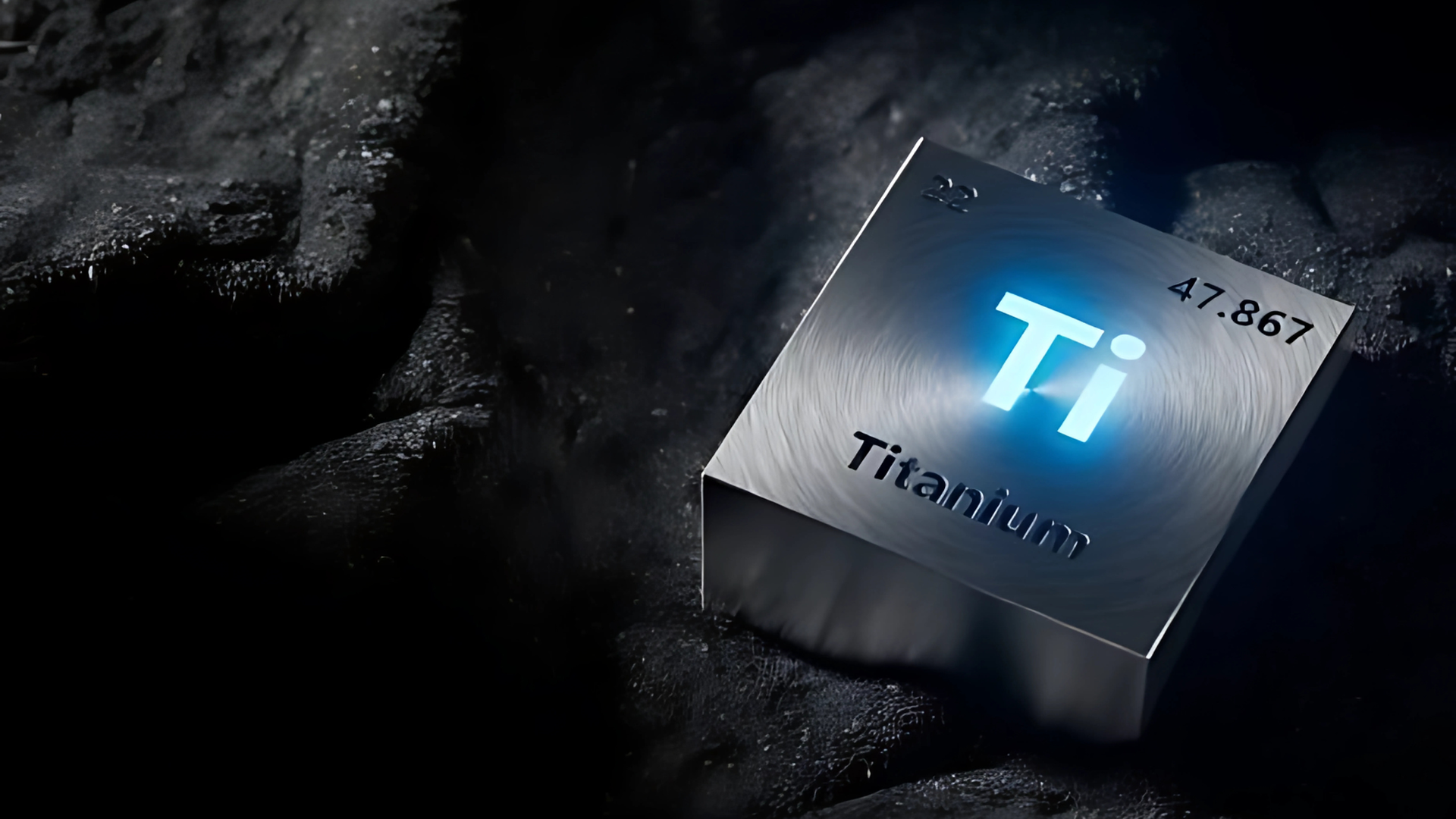
Additive Manufacturing leverages the layer-by-layer precision of 3D printing to minimize waste and optimize material usage, a process seemingly tailor-made for titanium. Currently, over 50% of the world’s titanium powder is consumed by the AM sector, with Ti-6Al-4V dominating due to its combination of lightweight durability and fatigue strength. Titanium’s unique properties enable it to meet demanding performance requirements in harsh operating conditions, such as extreme temperatures in flight or corrosive environments within the human body.
The transformation of titanium from an earth-mined ore to a reactive, ultrafine powder suitable for 3D printing involves extreme engineering. It begins with the Kroll process, an energy-intensive method that reduces titanium ores, such as ilmenite or rutile, into a porous titanium sponge. This sponge is then refined, alloyed, and converted into spherical powder forms through specialized processes like gas atomization (EIGA, VIGA), plasma atomization, or hydride-dehydride (HDH) treatment.
Countries leading titanium sponge production include China, Russia, Japan, and the United States. Lomon Billions and Baoji Titanium spearhead efforts in China, while VSMPO-AVISMA in Russia maintains full integration from ore to component. Japan’s Toho Titanium and Osaka Titanium concentrate on high-purity sponges vital to the medical and electronics sectors. Meanwhile, in the U.S., Timet and ATI ensure availability for defense and implant-grade applications.
Once in sponge or ingot form, manufacturers employ differing atomization technologies based on application requirements. For instance, AP&C and Tekna leaders in plasma atomization produce satellite-free particles ideal for electron beam melting (EBM), whereas Carpenter Additive and Sandvik Osprey rely on gas atomization to deliver uniform, fine powders for laser-based systems.
The global titanium powder market can broadly be segmented into three tiers:
While titanium isn’t an exceedingly rare metal, its production is highly resource-intensive. This reality is accelerating interest in recycling titanium in all forms, powders, sludges, swarf, and even finely ground dust. With aerospace and medical industries generating sizeable metal waste, recycling presents a practical opportunity to reduce environmental load, minimize production costs, and stabilize supply.
For instance, thermal spray technologies like Atmospheric Plasma Spray (APS) and Vacuum Plasma Spray (VPS) are used to coat medical tools with titanium powder, much of which can be collected, refined, and reused. Titanium dioxide, a residue, serves in consumer goods like toothpaste, sunscreen, and paint.
In additive manufacturing, advances in technology are enabling the reclamation of used titanium powders. Novel processes combining hydrogen-assisted reduction and gas-solid two-phase flow mechanics are being explored to remanufacture irregular-shaped, low-cost powder into spherical forms suitable for AM. These recycled powders show performance comparable to virgin materials but at a production cost up to 60% lower and with a drastically reduced carbon footprint.
Titanium’s reactivity in powder form introduces unique safety challenges. When finely divided, it becomes a highly combustible material. Preventative practices such as proper storage away from heat, using non-sparking tools, and detailed incident protocols are essential to avert fire or explosion risks, particularly when dealing with overspray and metal fines recovered during the AM process.
The evolution of the titanium ecosystem is not only a technological transformation but also a geographical diffusion. Southeast Asia, led by the Philippines, is aggressively pursuing AM capabilities with support from national initiatives like the Advanced Manufacturing Center (AMCen). By investing in titanium powder supply chains, local 3D printing hubs, and sustainable sourcing networks, the region seeks to emerge as a self-sustaining node in the global manufacturing grid.
Strategic partnerships, such as working with high-end suppliers like Laube Technology and regionally closer vendors like Baoji Titanium, are vital for nations like the Philippines. Local intermediaries such as SBS Philippines serve to bridge the logistical last mile, ensuring timely access to certified titanium powders for industries in rapid development.
The sourcing, production, and recycling of titanium alloy powder tell a story of global interdependence, highly specialized metallurgical capabilities, and the urgent move toward sustainable, localized supply chains. Additive Manufacturing offers not just innovation in product design, but also in operational efficiency, waste reduction, and environmental responsibility.
As titanium grows from a strategic commodity to a circulatory element in the industrial bloodstream, the rise of next-gen technologies and distributed supply models paves the way for a more agile and sustainable advanced manufacturing future. In this unfolding narrative, titanium alloy powders won’t just support progress; they will define it.