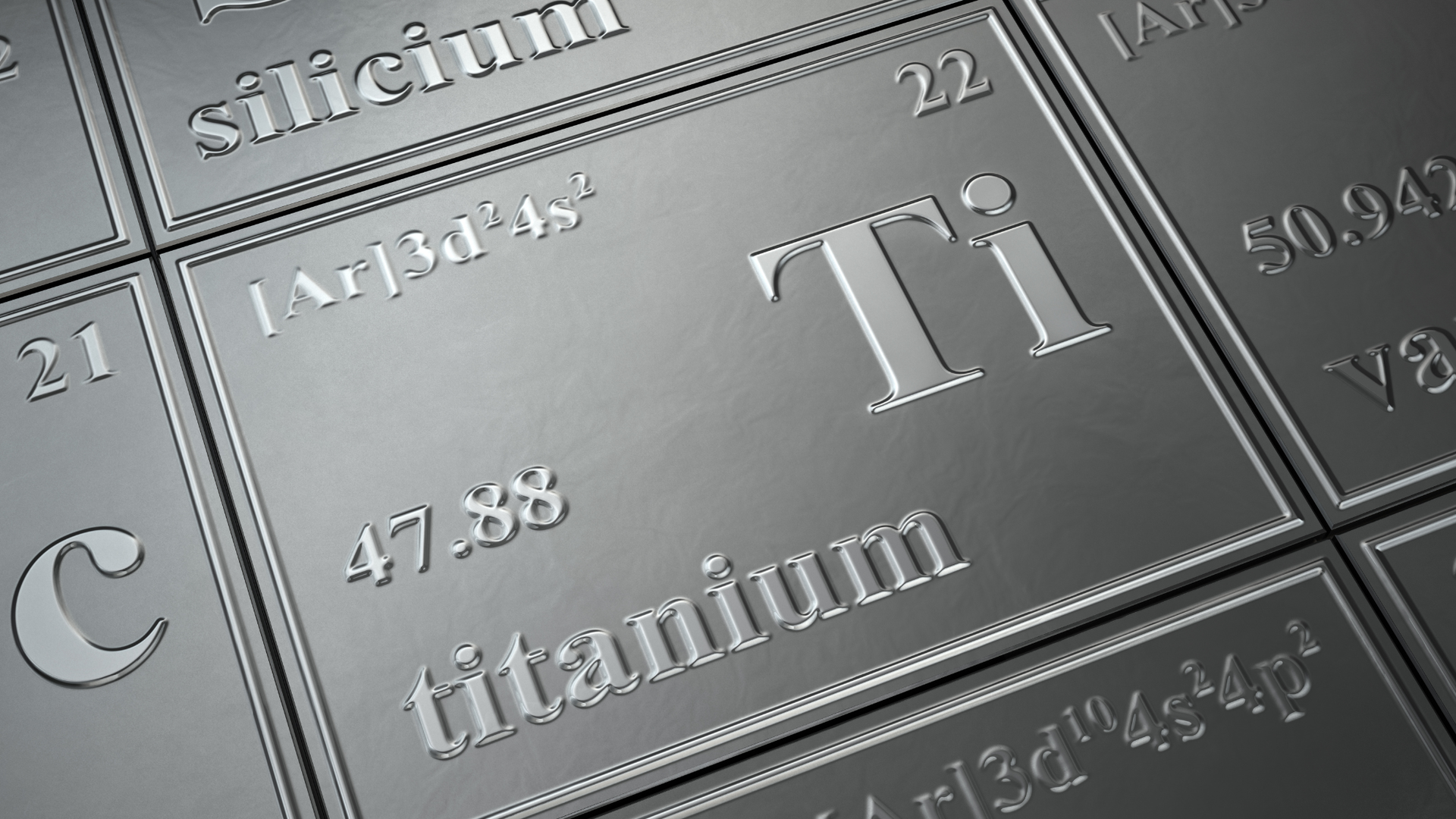
Making chlorine from simple saltwater is one of the world's most important industrial processes, producing materials needed for everything from clean drinking water to household plastics. But turning saltwater into chlorine gas is incredibly harsh on equipment. To survive this brutal chemical environment, modern industry relies on a specialized tool: a titanium electrode coated with a black layer of ruthenium dioxide. This combination of materials completely revolutionized chemical manufacturing. But why exactly do we use titanium, and what makes the black coating so special?
Imagine running an electric current through boiling, acidic saltwater. Most metals would dissolve or rust away in minutes. Titanium, however, is a "valve metal." When exposed to electricity in a harsh environment, titanium instantly reacts to form a microscopic, invisible force field around itself: a protective titanium dioxide layer. This protective layer stops the titanium from dissolving into the water. However, it creates a new problem: titanium dioxide blocks electricity. If the titanium simply protects itself, the electric current stops, and no chlorine is made.
To solve this issue, engineers apply a special coating directly onto the titanium. The coating is designed to perfectly match the microscopic crystal structure of the titanium's protective layer. Because the structures lock together like perfect puzzle pieces, the electrical current can bypass the insulating "force field" and flow smoothly into the water.
The coating applied to the titanium is mostly a precious-metal compound called ruthenium dioxide (RuO₂). If you look at one of these electrodes, it appears flat black. This is because ruthenium dioxide naturally absorbs almost all visible light, giving it a distinctive dark appearance. Ruthenium dioxide is the true engine of the chlorine cell. In chemistry, it acts as an "electrocatalyst," a substance that speeds up a reaction without being consumed. In saltwater, the ruthenium coating's surface acts as the perfect microscopic landing pad. Chloride ions in the saltwater stick to the ruthenium surface just tightly enough to pair up and form chlorine gas bubbles.
Because the ruthenium provides such a perfect staging ground, the chemical reaction requires very little extra electrical energy (known as "overpotential") to force it to happen. This extreme electrical efficiency saves chemical plants a lot of power, making the ruthenium coating very valuable. To make the coating more durable and cost-effective, manufacturers usually mix ruthenium with other stabilizers, like titanium dioxide or iridium.
To apply the ruthenium to the titanium, manufacturers paint on a chemical mixture and bake it at extremely high temperatures (around 450°C). As it bakes, the coating shrinks and cracks, leaving a surface that looks exactly like a dried-up mud puddle. These "mud cracks" are intentional; they create a massive amount of surface area for chemical reactions to occur. However, these same cracks are what eventually cause the electrode to fail. The aging process happens in two main ways.
Even when an electrode is totally exhausted and can no longer produce chlorine, it is far from worthless. The precious ruthenium left on the surface, along with the titanium base, is highly valuable. Instead of tossing these dead electrodes into the scrap heap, specialized precious metal recovery companies step in. For example, Phoenix Refining actively buys these decommissioned titanium screens and mixed-metal oxide scrap. By buying these materials from facilities, they can refine the scrap to recover rare ruthenium, turning spent, worn-out equipment into a valuable revenue stream while keeping precious metals in circulation.