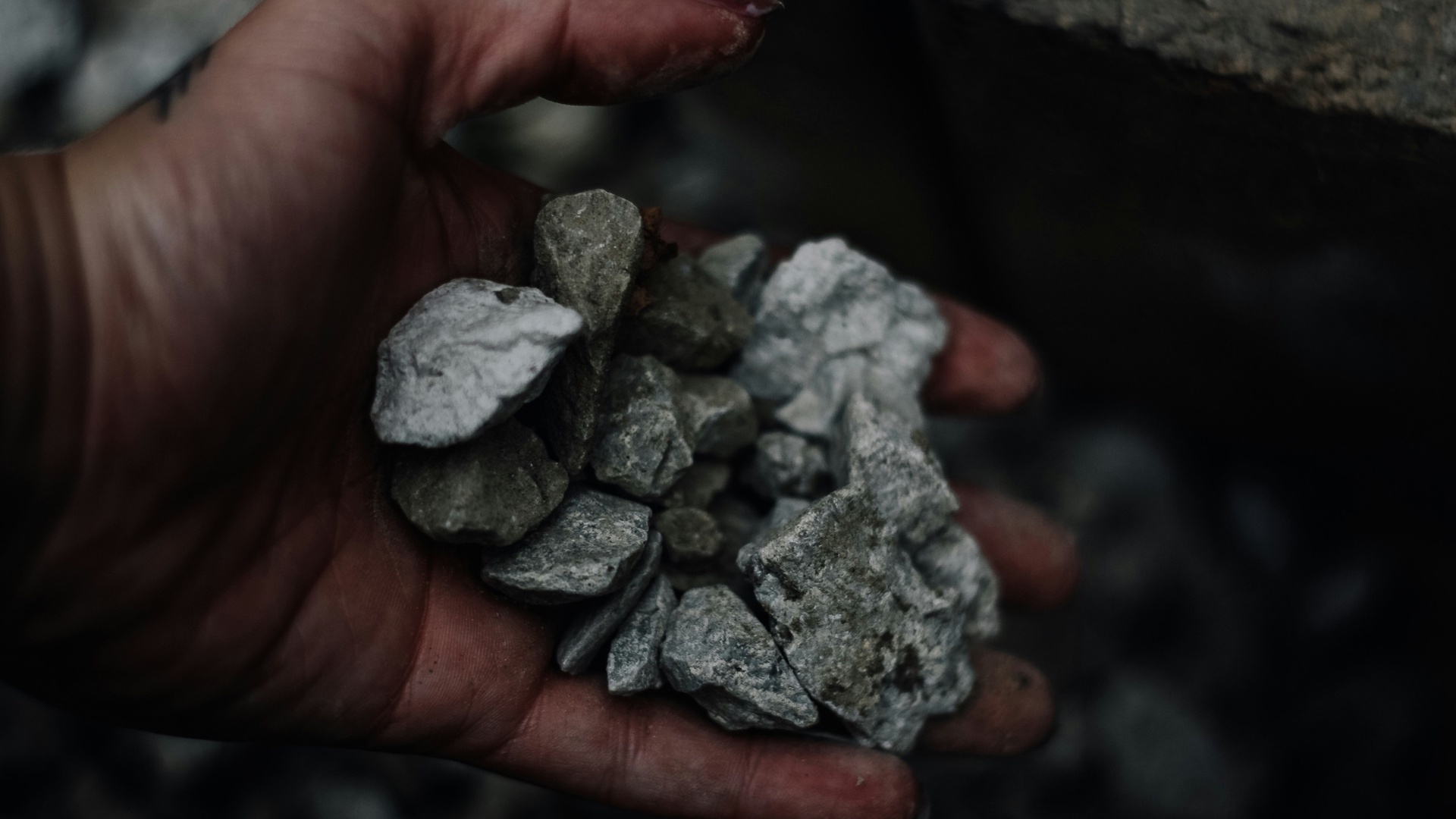
As global trade shifts toward resource nationalism and weaponized supply chains, securing the critical minerals needed for modern weaponry has become a vital U.S. priority. Advanced military technologies rely heavily on rare-earth elements and specialty metals, making the current U.S. dependence on China for both mining and refining a significant vulnerability. To address this issue, recent executive actions now classify critical minerals as strategic defense assets. This new framework aims to retain materials domestically, expand U.S. processing capacity, strengthen allied supply networks, and require defense contractors to strictly trace the origins of their metals.
One of the most immediate measures authorizes the Commerce Department, using the Defense Production Act, to restrict exports of recoverable critical minerals and materials. The policy covers resources found in discarded magnets, electronic waste, battery waste, industrial byproducts, and metal-rich machining debris.
The first restrictions prohibit exports of battery “black mass” and scrap containing tungsten. Black mass is the shredded material produced from used lithium-ion batteries and can contain lithium, cobalt, nickel, manganese, and other valuable minerals. Tungsten, known for its hardness and heat resistance, is used in armor, ammunition, precision tools, and specialized steel.
The restrictions take effect on August 27 and remain in place for one year. Exporters may seek waivers, but only by showing that the prohibition would cause undue hardship or irreparable harm. The objective is to treat recyclable material as a domestic strategic reserve rather than a low-value waste stream. The United States exports nearly 33,000 metric tons of electronic waste and other scrap each month, according to the Basel Action Network. Much of that material contains minerals that we could recover and return to American supply chains.
Keeping it at home could provide domestic recyclers with more feedstock while preventing foreign competitors from using American scrap to reinforce their processing dominance. It could also reduce the need for new mining, which is expensive, slow to permit, and often environmentally contentious. But export restrictions alone cannot create a recycling industry. The United States does not yet have enough capacity to process all the material it generates. Battery-recycling companies such as Li-Cycle and Ascend Elements have encountered severe financial problems, while proposed facilities have struggled with funding delays and volatile commodity prices. Amermin, a tungsten-recycling company, welcomed the export restriction but described it as a temporary measure rather than a complete solution. In the company’s view, keeping scrap in the country will buy time, but the United States must still build the plants needed to process it. That tension captures the central challenge of the new policy: restricting foreign dependence is much easier than constructing a competitive domestic alternative.
A second pillar of the strategy focuses directly on the defense industrial base. Contractors will be expected to trace covered metals through every tier of their supply chains, potentially as far back as the mine from which the material originated. That requirement will demand much more detailed bills of materials from prime contractors and their lower-tier suppliers. Companies will have to identify not merely who sold them a component but also where the underlying metal was mined, separated, refined, and transformed into magnets, alloys, or other specialized products. The goal is to remove covered Chinese materials from U.S. defense supply chains by January 1, 2027. Contractors seeking exceptions after that date will have to submit detailed mitigation plans explaining why compliant materials remain unavailable and how they intend to eliminate the prohibited source.
Meeting that deadline will be difficult. Metals purchased through global commodity markets are frequently blended, making their origin hard to determine. Smaller suppliers may have little visibility beyond their immediate vendors, while processors may combine ores, recycled metals, and intermediate products from several countries. Even when domestic substitutes are available, they cannot necessarily be introduced immediately. Materials used in aircraft, missiles, submarines, and satellites must undergo demanding qualification and performance testing. Replacing a magnet, alloy, or battery material can require redesigns, safety reviews, and extensive testing before it is approved for military use.
The tracing mandate therefore represents more than a compliance exercise. It will force the Pentagon and its contractors to map a supply network that has often been opaque and to confront vulnerabilities that may extend many layers below the major defense companies.
The urgency is evident in U.S. import-reliance figures. The United States is fully dependent on imports for gallium and natural graphite and approximately 91% dependent on foreign sources for antimony. Aluminum import reliance is commonly estimated at between 52% and 60%, depending on the methodology used. Even that aluminum figure understates the upstream vulnerability. The United States depends entirely on foreign bauxite, the ore from which primary aluminum is produced.
These materials serve distinct but essential military purposes. Gallium is used in advanced semiconductors and radar systems. Natural graphite is required for battery anodes and has aerospace applications. Antimony is used in ammunition, batteries, and military-grade flame retardants. Aluminum is indispensable in aircraft, vehicles, missiles, and other weight-sensitive systems.
Tungsten is especially important for armor-piercing ammunition, hardened steel, and high-temperature components. Copper is critical for electronics, motors, communications systems, and power infrastructure, while nickel is widely used in aerospace alloys. Modern defense systems are extraordinarily metals-intensive. As militaries expand drone fleets, replenish munitions and invest in autonomous systems, demand is likely to increase further. One estimate placed rare-earth permanent-magnet use by the drone industry at between 3,000 and 8,000 metric tons in 2025, about 3% of total rare-earth demand. This growing requirement is colliding with an already strained defense sector. According to a PwC analysis cited in the supplied material, the five largest U.S. defense contractors had a combined backlog of $1.36 trillion at the end of 2025, up 24% from the previous year. Mineral shortages are not the only cause, but they can compound delays by constraining the availability of specialized components.
The United States mines roughly 13% to 15% of the world’s rare earths, but mining alone does not create a secure supply chain. China controls more than 80% of global rare-earth refining and processing and approximately 90% of high-performance permanent-magnet manufacturing. This gives Beijing leverage at the most important stages of production. Rare-earth ore mined in the United States may still depend on Chinese-linked facilities for separation, refining, or conversion into magnets before it can be used in a fighter aircraft, submarine, radar array, or precision weapon.
China demonstrated that leverage in April 2025 by sharply restricting supplies of several medium and heavy rare earths. Magnet shipments fell, disrupting manufacturers in the United States and allied countries. Beijing has also imposed controls on gallium, germanium, graphite, antimony, and tungsten, often in response to Western restrictions or financial support for competing supply chains. A temporary U.S.-China trade truce has eased some pressure, but it is scheduled to expire on November 10, 2026. If it is not extended, renewed Chinese controls could restrict graphite and heavy rare-earth exports just as U.S. rules impose tougher sourcing requirements on defense companies. The result could be a supply-chain squeeze: contractors would be prohibited from using certain Chinese-origin materials but unable to obtain enough qualified alternatives.
Washington is therefore combining restrictions with financial incentives designed to make compliance possible. Federal loans, grants, procurement contracts, equity investments, price guarantees, and purchasing commitments direct funding toward mining, refining, recycling, and magnet manufacturing.
A 50% tariff on core aluminum and copper imports aims to protect U.S. producers from subsidized foreign competition. Federal assistance is also supporting additional aluminum-smelting capacity and domestic copper production. Other investments target synthetic graphite, antimony mining and refining, battery recycling, and a complete rare-earth mine-to-magnet supply chain. The government is also experimenting with price floors and long-term purchasing commitments. These mechanisms are designed to protect strategically important projects against sudden price declines caused by Chinese overproduction. A domestic refinery may be technically viable but still fail if a foreign competitor floods the market, drives down prices, and waits for the American facility to close.
MP Materials, the leading U.S. rare-earth producer, has become a prominent example of this approach. Government-backed price support can give producers and investors confidence that a project will survive commodity-market volatility long enough to establish domestic capacity. The policy has critics. Guaranteed prices can support inefficient production, shift risk to taxpayers, and distort markets. European governments have generally been more reluctant than Washington to adopt direct price floors, although the European Union is considering local-content thresholds and other forms of protection. Still, the gap between project timelines and market cycles is real. Mines, refineries, and processing plants can take a decade or more to develop, while mineral prices can collapse in months. Without some form of government support, private investors may be unwilling to finance projects whose strategic value exceeds their near-term commercial return.
The policy shift is already attracting capital. Eighteen mining companies reportedly went public over the past 12 months with ambitions to supply the U.S. defense sector. Some offerings were modest, but others have secured support through Pentagon-linked programs. The U.S. Army has reached preliminary agreements with companies to develop critical-mineral processing facilities on military bases. Plans include rare-earth separation at the Tooele Army Depot in Utah, graphite purification at either Pine Bluff Arsenal in Arkansas or Anniston Army Depot in Alabama, and additional facilities for lithium and boron. Material produced at some of these sites could be stockpiled for military use.
The United States is also looking abroad. Government agencies and private investors are pursuing projects in Alaska, Africa, and allied countries, including potential investments in copper, cobalt, manganese, lithium, and rare earths. A joint critical-minerals fund involving Orion Resource Partners, the U.S. International Development Finance Corporation, and Abu Dhabi’s ADQ aims to mobilize billions of dollars for projects outside Chinese control. These efforts reflect an important reality: strategic decoupling does not necessarily mean bringing every stage of production inside U.S. borders. It can also mean building supply chains among trusted allies and partners.
The United States is unlikely to duplicate China’s mineral ecosystem quickly. Beijing has spent decades building mines, low-cost processing capacity, technical expertise, energy infrastructure, and downstream manufacturing. Catching up will require sustained investment across multiple administrations. The practical goal is therefore resilience rather than autarky. That means expanding domestic production where possible, developing allied sources where necessary, recycling more material, maintaining strategic stockpiles, and improving transparency across the defense industrial base.
It also means recognizing that restrictions can have unintended consequences. Blocking scrap exports without creating processing capacity could leave material stranded. Tariffs can protect producers but raise costs for manufacturers. New mines can improve security while encountering lengthy permitting processes and local opposition. Tracing rules can expose vulnerabilities but also burden smaller suppliers that lack sophisticated compliance systems. Nevertheless, the direction of policy is unlikely to reverse. The modern economy depends on copper for power systems and data centers, lithium and graphite for batteries, rare-earth magnets for drones and guidance systems, and specialty metals for aerospace and munitions. Both Democratic and Republican administrations have concluded that leaving these supply chains concentrated in a geopolitical rival is an unacceptable risk.
America’s military advantage rests not only on the sophistication of its aircraft, submarines, satellites, and precision weapons. It also depends on secure access to the ores, refined metals, alloys, magnets, and recycled materials that make up those systems. The new minerals strategy is an attempt to rebuild that foundation. Export controls and contractor mandates may provide the immediate pressure, but their success will ultimately be measured by what follows: functioning recycling plants, commercially durable mines and refineries, transparent defense supply chains, and reliable partnerships with allies. Without that infrastructure, the restrictions will remain a temporary shield. With it, they could become the basis of a more resilient American arsenal.