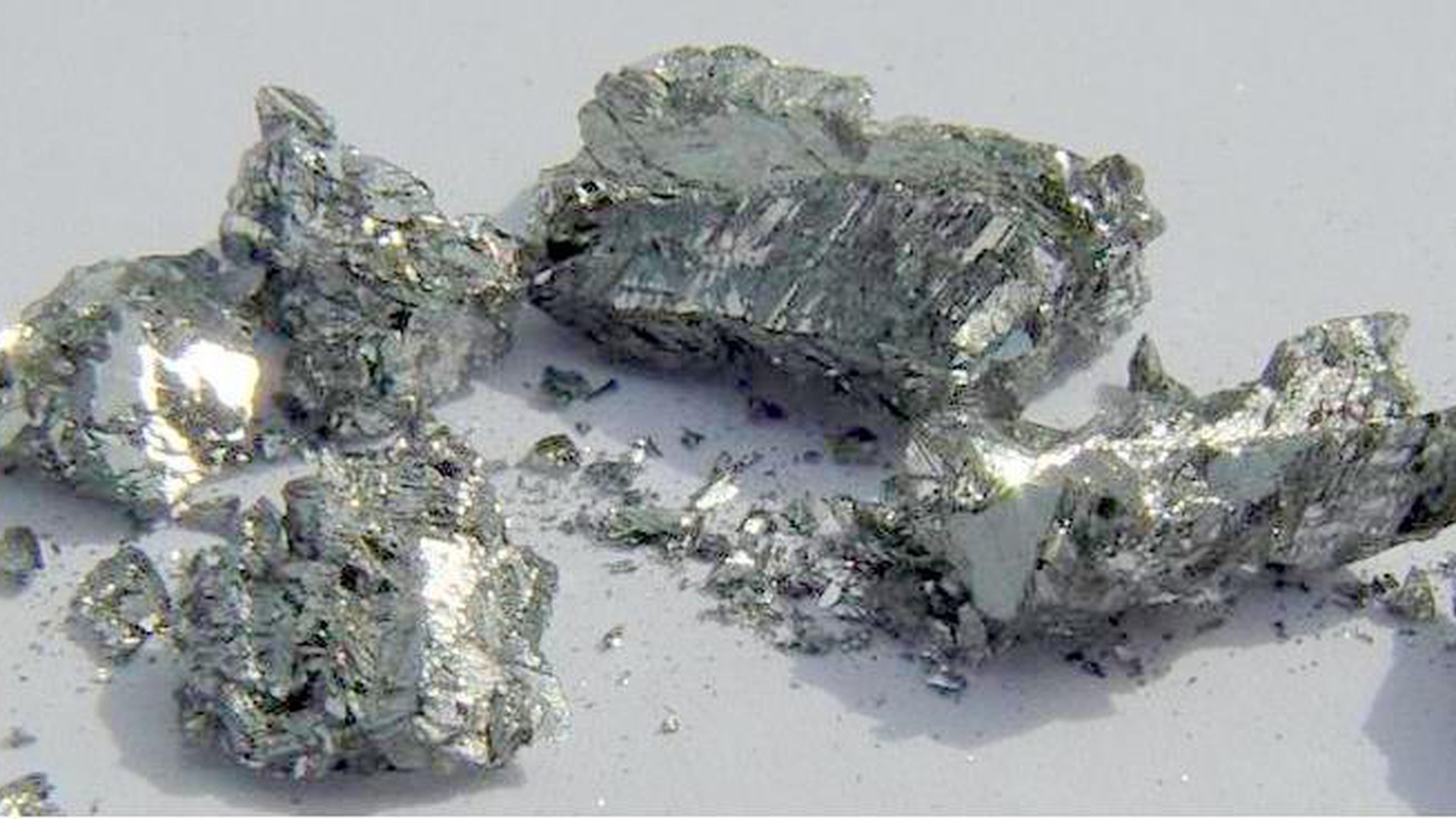
The United States is confronting a strategic vulnerability that has been years in the making. According to reporting cited by the South China Morning Post, the U.S. has only about two months of rare earth supplies available for military use. That figure is alarming not simply because of its size, but because rare earth elements sit at the heart of modern warfare, advanced manufacturing, clean energy technologies, and the digital economy.
If the estimate is accurate, Washington’s ability to sustain a prolonged military campaign, particularly amid rising tensions in the Middle East, could be constrained by a mineral supply chain it does not control. In a world where missile guidance systems, fighter aircraft, radar platforms, electric motors, wind turbines, batteries, and data centers all compete for critical inputs, rare earths and other strategic minerals have become as important to power projection as fuel and ammunition.
Rare earth elements are indispensable in high-performance magnets, sensors, electronics, and precision systems used across advanced defense platforms. Guided weapons systems rely on a wide range of critical minerals. Combat aircraft and naval systems do as well. These materials are embedded in the technologies that make modern militaries effective: targeting, propulsion, radar, communications, and electronic warfare.
That is why the prospect of the U.S. having only 60 days of military rare-earth supplies has triggered concern. Analysts cited by SCMP argued that China’s control over supply chains could give Beijing indirect leverage over the duration and cost of potential U.S. military operations, including any future strikes on Iran. In practical terms, a constrained flow of rare earths could make replenishment slower, procurement more expensive, and readiness more fragile.
The timing is particularly sensitive. President Donald Trump is scheduled to travel to China later in March 2026, his first trip there since 2017, at a moment when Washington appears more urgently in need of rare earth stability than Beijing is of a trade compromise.
The vulnerability stems from one central fact: China dominates the global rare earth supply chain. It controls more than half of the global mine supply and nearly all processing capacity for many rare earth products. In refined rare earths and rare earth magnets, the concentration is even more severe. Estimates included in a broader critical minerals analysis show that China supplies roughly 91% of refined rare earths and 92% of magnets.
This matters because mining ore is only the beginning. The strategic bottleneck lies in separation, refining, and magnet production, the stages where raw material becomes usable in fighter jets, missiles, electric vehicles, and clean energy systems. The U.S. and its allies have known for years that overdependence on China posed a risk, but rebuilding mining and processing ecosystems outside China has proven far slower than the growth in demand.
Beijing is not loosening its grip. Under its 15th Five-Year Plan for 2026–2030, China has signaled that it will further strengthen its rare earth industry and tighten export controls. Last year’s export restrictions already sent Western manufacturers scrambling to secure alternative supplies in time to meet production deadlines. Any additional controls could deepen market disruptions, increase prices, and expose how little flexibility remains in non-Chinese supply chains.
The rare earth issue is only one part of a larger and increasingly troubling picture. A new report from the U.S. Geological Survey shows that America’s dependence on imported minerals increased over the past year rather than improved.
According to the USGS annual mineral commodities summary, the United States was 100% import reliant in 2025 for 16 of the 90 non-fuel mineral commodities it tracked, up from 15 the year before. It was more than 50% import-reliant for 54 commodities, up from 46 in 2024.
The U.S. is totally dependent on imports for arsenic, asbestos, cesium, fluorspar, gallium, natural graphite, indium, manganese, natural mica, niobium, rubidium, scandium, strontium, tantalum, titanium sponge, and yttrium. Most are on the U.S. critical minerals list. China figures prominently across many of them, supplying nearly half of the US's arsenic and graphite imports, 55% of antimony imports, and 70% of rare earth imports.
That growing dependence has sharpened the sense of urgency in Washington. Rich Nolan, president and CEO of the National Mining Association, said the USGS report underscores how difficult it is to reverse China’s decades-long strategy to dominate global minerals markets. The challenge is not simply geological. It is industrial, financial, regulatory, and geopolitical.
Rare earths are a subset of the broader critical minerals universe, which includes lithium, cobalt, nickel, copper, and graphite. These materials are increasingly essential to both economic growth and national security. Demand for critical minerals is rising on multiple fronts. In the defense sector, global defense budgets increased 9% year-over-year in 2024, far exceeding the average pace over the previous five years. This trend is expected to continue, particularly in NATO Europe, where defense spending is projected to approach 3% of GDP by 2030. Meanwhile, the United States has indicated plans to increase its defense budget by 2027.
At the same time, the energy transition is driving demand for these materials. Wind turbines, solar systems, electric vehicles, and grid-scale energy storage solutions all require substantial quantities of lithium, nickel, cobalt, graphite, copper, and rare earth elements.
Additionally, the rise of artificial intelligence and the expansion of data centers are contributing to this surge in demand. The infrastructure needed for AI relies heavily on large amounts of electricity and a variety of critical minerals for servers, power systems, cooling mechanisms, semiconductors, and networking equipment. By 2035, it’s estimated that data centers could account for nearly 9% of the total electricity demand in the U.S.
As a result of these converging trends, we are witnessing a surge in structural demand for these essential materials. J.P. Morgan Global Research predicts that global lithium demand will grow by 16% year-over-year in 2026, with electric vehicles driving most of the incremental demand while energy storage continues to gain traction. Likewise, copper demand is anticipated to remain robust, fueled by ongoing upgrades to electrical grids and the expansion of renewable energy systems. In summary, the same materials that are crucial for defense purposes are equally vital for efforts related to decarbonization, electrification, and the development of digital infrastructure.
The Trump administration has begun moving more aggressively. It recently launched a $12 billion initiative to stockpile critical minerals, including rare earths, and has sought to organize allies into a preferential trade bloc for strategic materials. The Defense Logistics Agency aims to build a roughly $1 billion stockpile of minerals such as cobalt, antimony, tantalum, and scandium. Lawmakers have also proposed a separate $2.5 billion strategic mineral stockpile.
The Pentagon has increased procurement activity and, in 2025, became the largest shareholder in MP Materials, the only fully integrated rare-earth magnet producer in the United States, in a move designed to accelerate domestic magnet manufacturing and secure the Pentagon’s supply needs. The U.S. government has also backed major refining projects, including a $7.4 billion deal with Korea Zinc to build the nation’s largest zinc smelter, which will also produce 12 other critical minerals.
These are important shifts. But they do not solve the near-term problem. The biggest obstacle is time. According to industry estimates cited in response to the USGS report, it takes an average of 29 years to bring a mine online in the United States. That means stockpiles, financing support, direct equity stakes, and allied partnerships may help reduce long-term dependency. Still, they cannot rapidly replace Chinese capacity if supply is cut or sharply reduced in the next several months.
There are pathways to a more resilient supply chain. North America, Australia, Africa, South America, and parts of Southeast Asia all offer opportunities for expanded mining and processing. The U.K. is exploring domestic production and recycling. The EU’s Critical Raw Materials Act aims to prevent excessive dependence on any single country by capping reliance on one third-country source. Australia is moving to fast-track its own strategic stockpile of rare earths, antimony, and gallium.
Recycling may also help. Over time, circular economy strategies could reduce new mining requirements by up to 30% if collection, processing, and recovery systems are built at scale. But again, this is a medium- to long-term answer, not a solution to an immediate 60-day military reserve concern.
What makes the current moment especially significant is that rare earths are no longer merely a trade issue. They are now a geopolitical instrument. China’s role as the largest supplier of many critical minerals to the U.S. gives it leverage that extends well beyond commercial pricing. In a crisis, export controls or subtle supply restrictions could affect defense production schedules, procurement costs, and strategic planning in Washington. Even in the absence of a full cutoff, the threat of disruption can alter negotiation dynamics.
That is why Trump’s upcoming trip to China carries unusual weight. If the U.S. enters talks while facing a shrinking military stockpile and broad dependence on mineral imports, Beijing may perceive little need to rush toward concessions. As one analyst told SCMP, China’s control over rare earth supply chains provides significant indirect leverage over the duration and cost of potential conflicts.
The U.S. rare earth crunch is not a temporary market imbalance. It is the result of a long period in which America outsourced key links of the supply chain for materials that now underpin military strength, industrial competitiveness, and energy security.
The immediate concern is obvious: a military reserve reportedly measured in weeks rather than years. But the broader lesson is even more important. Critical minerals are becoming the foundation of strategic power in the 21st century. Nations that mine, refine, process, and stockpile them will hold an increasingly decisive advantage over those that buy them on global markets.
For Washington, the challenge is now urgent. Stockpiling, allied coordination, domestic mining reform, processing investment, and recycling expansion all need to accelerate at once. Otherwise, the U.S. risks discovering that the limits of its military readiness, industrial ambition, and energy transition are being set not in Washington but in the mineral supply chains it failed to secure.