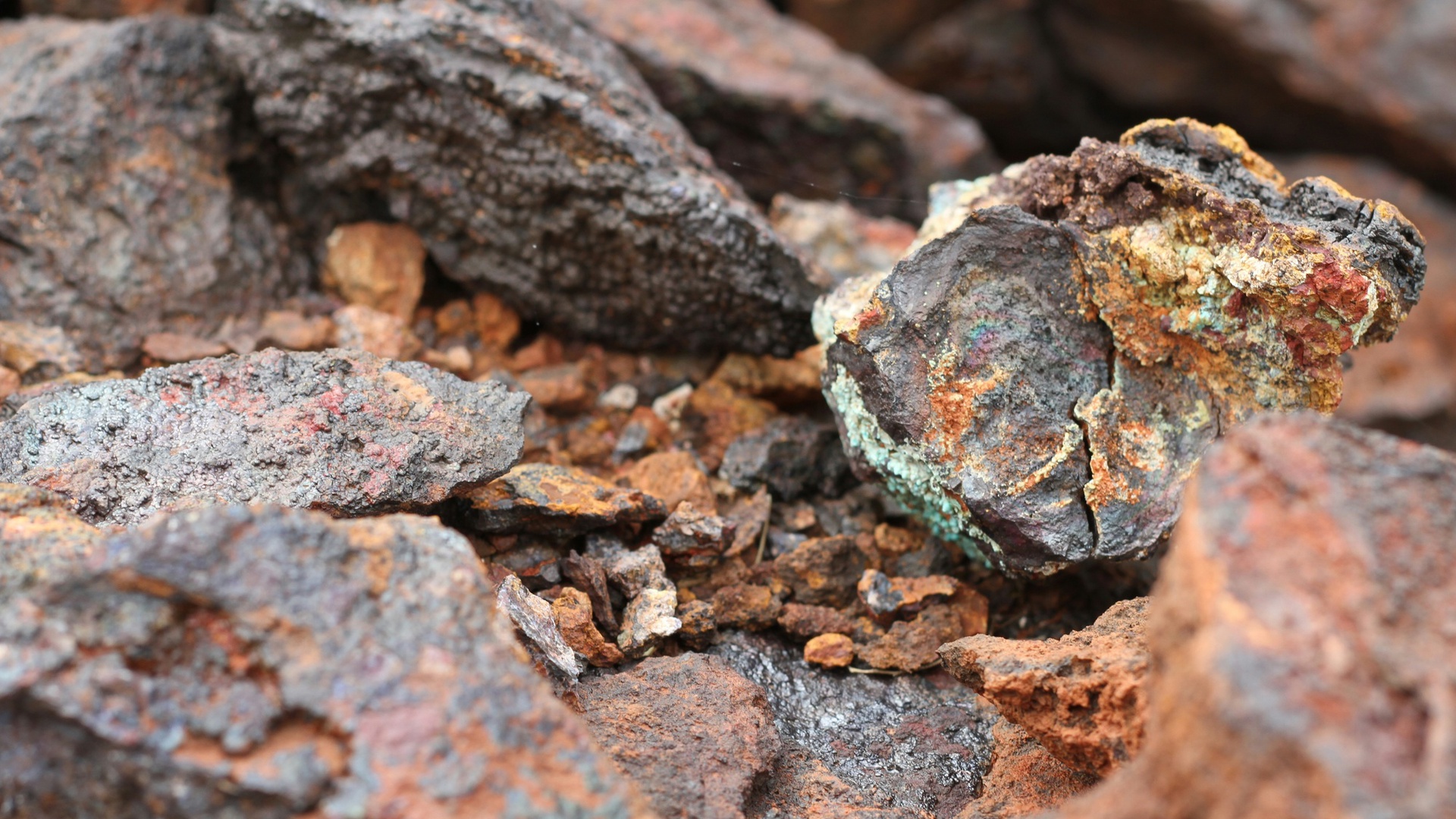
In a move that has sparked both strategic interest and domestic controversy, Pakistan has shipped its first consignment of critical minerals, including rare-earth elements such as neodymium and praseodymium, to the United States. The delivery, officially confirmed by U.S. Strategic Metals (USSM) and Pakistan's Frontier Works Organization (FWO), marks a milestone in the countries' newly formed $500 million mineral development partnership. But beneath the diplomatic fanfare lies a complex web of opportunity, geopolitical repositioning, and ongoing skepticism.
The shipment is the first tangible outcome of the Memorandum of Understanding (MoU) signed in September 2025 between Pakistan's state-owned engineering arm FWO and Missouri-based USSM. The MoU sets the foundation for building a poly-metallic refinery to process a range of critical minerals, strengthening U.S. resource independence and opening a new chapter in Pakistan-U.S. bilateral relations. Stacy W. Hastie, CEO of USSM, called it "a step forward in supplying critical minerals to the United States," emphasizing the shipment as part of a broader effort to reduce U.S. dependence on Chinese processing capacity. Prime Minister Shehbaz Sharif echoed the sentiment, praising the move as aligned with the country's economic growth goals and vision for resource self-determination.
The initial batch reportedly includes antimony, copper concentrate, and enriched rare earths such as neodymium and praseodymium, key metals used in electric vehicle motors, wind turbines, and advanced weapons systems.
Despite the celebratory language, technical experts and analysts urge caution. Details of the shipment remain limited, particularly on volume, purity, and whether the rare earth materials are in mined, upgraded, or separated form. Critically, the rare earth value chain does not begin and end with mineral extraction. The downstream operations- cracking, leaching, separation, refining, and magnet manufacturing are where the true strategic control lies, and China still controls over 85% of that global capacity. Pakistan, for now, lacks local separation infrastructure, making it unclear whether the announced shipment provides immediate strategic utility or remains largely symbolic. "There's a difference between exporting ore in a drum and delivering separated REEs that can go straight into a jet turbine or electric motor," said one REEx analyst. "Until separation facilities are confirmed and scaled, Pakistan's role will be limited within the rare earths value chain."
Pakistan holds significant but largely underexplored geological potential. Some national sources estimate its mineral wealth, including rare earths, copper, antimony, and other industrial-grade metals, at $6 trillion. However, such valuations remain steeped in optimism and lack corroboration by international geological surveys. Projects in provinces like Balochistan and Gilgit-Baltistan have long been cited as prospective mineral corridors, but face infrastructural, political, and environmental challenges.
For Islamabad, this deal could catalyze its mining sector, at least symbolically putting Pakistan "on the map" of critical mineral diplomacy. And for investors, early-stage engagement with U.S.-aligned enterprises offers promise, albeit with the caveat that ground execution will determine outcomes, not just MoU language.
From a geopolitical standpoint, the Pakistan-U.S. mineral engagement challenges the global status quo dominated by China. As the U.S. Department of Energy ramps up initiatives to secure clean energy and defense-critical minerals backed by nearly $1 billion in new funding, and as President Trump pushes his "Unleashing American Energy" executive directive, Pakistan emerges as an unlikely but increasingly relevant player. By linking up midstream infrastructure with a U.S. partner, Islamabad is tilting toward a Western-aligned critical-mineral supply route. That's a significant shift, given Pakistan's historically close ties to China, which has previously helped build infrastructure projects under the Belt and Road Initiative. Yet this alignment is likely to face both geopolitical and internal conflict.
The deal has triggered immediate backlash from Pakistan's major opposition party, Pakistan Tehreek-e-Insaf (PTI). Party spokesman Sheikh Waqqas Akram criticized the agreement as "secret, lopsided, and lacking parliamentary oversight," calling for a full disclosure of contract terms and a national debate in the National Assembly. PTI's criticism hints at deeper concerns about sovereignty, resource nationalism, and military involvement. FWO, while technically a commercial branch, is affiliated with Pakistan's armed forces. That raises transparency issues, especially in a nation where democratic governance remains fragile, and military influence casts a long shadow over economic policy.
Further fueling suspicion were reports that Pakistan's military later denied a broader agreement that could have involved access to strategic infrastructure such as Pasni Port. Although dismissed as a "commercial idea," the implications of such affiliations cannot be ignored, especially amid growing regional rivalries with India, China, and the Gulf Powers.
Key questions loom large as we consider the implications of this shipment. First and foremost, will a refinery in Pakistan truly come to fruition, and if so, what timeline can we expect? Additionally, a pressing concern is whether sufficient quantities of rare-earth-bearing minerals will be available to sustain exports. Furthermore, can Pakistan effectively enforce environmental and labor standards in its mining operations that align with international expectations? Lastly, shifting political dynamics in Islamabad will determine whether this emerging partnership derails progress or ultimately empowers it.
The U.S.-Pakistan rare earth shipment is, for now, more of a strategic signal than an industrial shift. It formally introduces Pakistan to the Western mineral conversation, tentatively tracks with Trump's domestic resource push, and offers diversification in a China-heavy sector. But the real work of building refining capacity, validating resource deposits, and scaling exports still lies ahead.
For investors, policymakers, and supply chain strategists, this partnership should be viewed not as a standalone breakthrough but as the first move in a longer game being played out across the global, fragmented rare-earth battlefield.
In a world where control over critical minerals could define economic and military leadership, the first Pakistani shipment is a whisper that might yet grow into a roar, but only if the vision becomes reality on the ground.