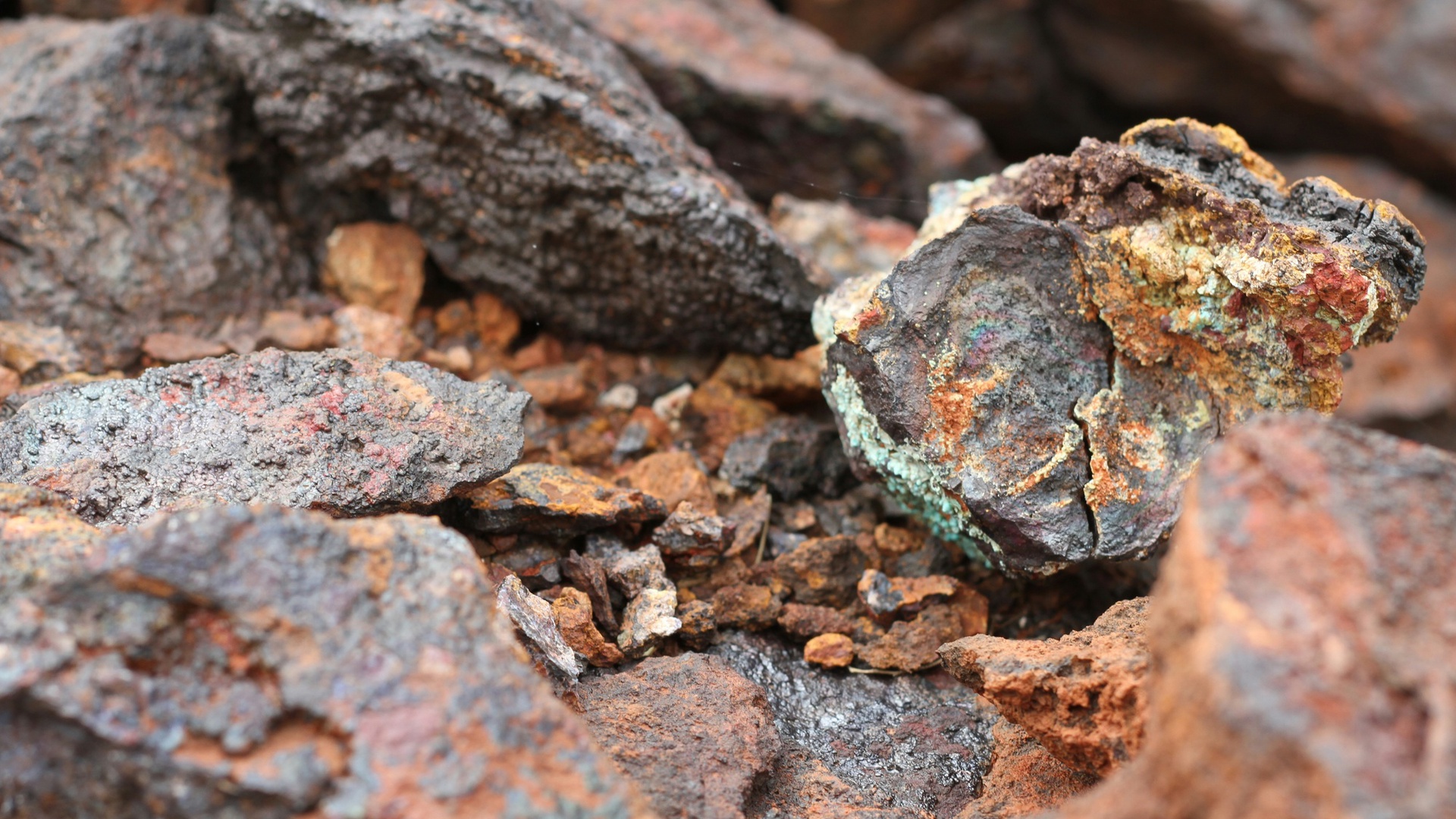
Malaysia has reaffirmed its policy to ban the export of raw rare earth elements (REE), even in the wake of a new minerals cooperation agreement signed with the United States. Investment, Trade, and Industry Minister Tengku Datuk Seri Zafrul Abdul Aziz reiterated that the policy aims to ensure local value creation and technological development, rather than serving as a mere supplier of unprocessed raw materials to global industries.
Speaking during a special parliamentary session on the Malaysia-U.S. Reciprocal Trade Agreement (ART) on October 29, 2025, Tengku Zafrul emphasized that Malaysia's strategic aspiration is to strengthen its downstream industrial ecosystem. “We no longer want to be a country that only digs and ships out cheap raw materials as we did in the past,” he said.
“This policy is not to prevent trade forever. It is to prevent the export of cheap, unprocessed raw materials so that value is added in Malaysia,” he clarified, citing critical minerals and REE as examples of strategic sectors that must undergo domestic processing before being exported. Once processed, high-value REE products such as oxides, alloys, or magnet components may be exported as components in the global supply chain.
Malaysia's estimated 16.1 million metric tonnes of rare earth deposits place it among the world’s most resource-rich nations in this increasingly vital sector. Yet, as the global demand for REEs surges, driven by their use in electric vehicles, semiconductors, and defense applications, Malaysia is prioritizing domestic upgrading and industrial capability over raw commodity trade.
The country’s ban, first signaled by Prime Minister Anwar Ibrahim earlier this year, was reaffirmed as a cornerstone of economic policy in response to concerns that the U.S.–Malaysia critical minerals deal might necessitate relaxing export controls.
While the joint Malaysia-U.S. statement appeared to contradict this stance, stating Malaysia "agreed not to prohibit or restrict the export of critical minerals or rare earth elements to the U.S.," Malaysian officials clarified that the agreement would be implemented “in line with national laws and policies.” Interpretation hinges on a key nuance: the deal does not explicitly differentiate between raw and processed materials. This gives Malaysia legal and diplomatic room to maintain its value-adding policy, as the commitment to non-restriction can be fulfilled through exports of refined REE products, not raw ores.
Malaysia’s REE strategy also encourages investment from abroad, provided that processing facilities are built locally. This policy has attracted interest from both Western and Eastern partners. Among the most notable is Lynas Rare Earths, the Australia-based company that operates the largest rare earth separation plant outside China in Kuantan, Malaysia. Lynas already imports rare earth concentrates from Australia, refines them in Malaysia, and ships processed oxides globally. Its operations are aligned with Malaysia’s value-first approach, and its expansion includes a new A$180 million heavy rare earth separation facility slated to begin production by 2026.
New consortia are emerging as well. DTEC Mineral & Metal Technology (MMT), a Malaysian-American venture, has announced plans to initiate both mining and processing operations in Malaysia, signaling a first for the country's rare earth industry. Meanwhile, domestic company Southern Alliance Mining (SAM) has expressed readiness to diversify into the rare earth sector and is exploring new partnerships, including with China. Malaysia's openness to both Eastern and Western collaborators reflects a broader approach to "coopetition" where geopolitical alignment coexists with strategic pragmatism.
Addressing concerns in Parliament, Tengku Zafrul was forthright in dismissing allegations that Malaysia’s policy has been compromised for quick gains or under U.S. political pressure. Referring to the ART procurement list, the minister said it contained no government spending and no surprises, highlighting the Malaysia Aviation Group’s Boeing aircraft acquisition and Petronas’ proposed U.S. LNG imports as independent, commercially motivated decisions made before the trade pact. “Our procurement decisions are not political mandates. Petronas, for instance, is simply ensuring supply stability and fulfilling contractual obligations,” Tengku Zafrul noted, asserting national interest remains the priority.
Through the ART agreement, Malaysia secured its position as a “trusted supply chain partner” to the U.S., a status expected to smooth bilateral trade in high-tech and strategic goods. This also places Malaysia in a favorable light as Washington continues its Section 232 investigation into the global semiconductor industry, a probe spurred by U.S. efforts to reduce dependency on Chinese supply chains.
The rare earth sector is now expected to follow similar trends, with Malaysia serving as a diversification hub for U.S. critical minerals sourcing, complementing American allies like Australia. As Minister Zafrul noted, the country welcomes “strategic cooperation with the U.S. and Australia” to build a high-value REE sector rooted in Malaysia.
Malaysia’s clear refusal to export raw rare earths, even to its strategic partners, marks a policy watershed, signaling the country's maturation from a raw resource supplier to a technological stakeholder. This shift not only enhances national economic resilience but also deepens Malaysia's integration into global high-tech manufacturing supply chains.
While it may take years for Malaysia’s domestic refining and production capacity to match global demand, the groundwork is being laid. From Lynas and DTEC MMT to multi-party discussions involving Malaysia’s sovereign wealth fund Khazanah with Chinese investors, the signal is clear: Malaysia is open for business but on its terms.
This recalibrated policy reflects a modern industrial strategy that could position Malaysia as the rare earth bridge between China and the West, a neutral, rules-based player in a geopolitically sensitive sector that underpins tomorrow’s technologies.
In the short term, Malaysia's export volumes may remain modest, limited to what Lynas and other processors can produce locally. But in the medium to long term, if Malaysia scales its REE processing capabilities, it could soon offer the world, including the U.S., a stable, non-Chinese source of critical minerals.
Thus, the policy is not a retreat from global trade, but an unmistakable step toward strategic self-assertion. With rising global competition for rare earth access, Malaysia is playing the long game and reshaping the rules of that game in Southeast Asia and beyond. By consolidating its position as both a resource holder and industrial processor, Malaysia signals that it will no longer be a passive participant in the critical minerals race but a central node with the power to shape how, when, and where rare earth elements fuel the next generation of technology.