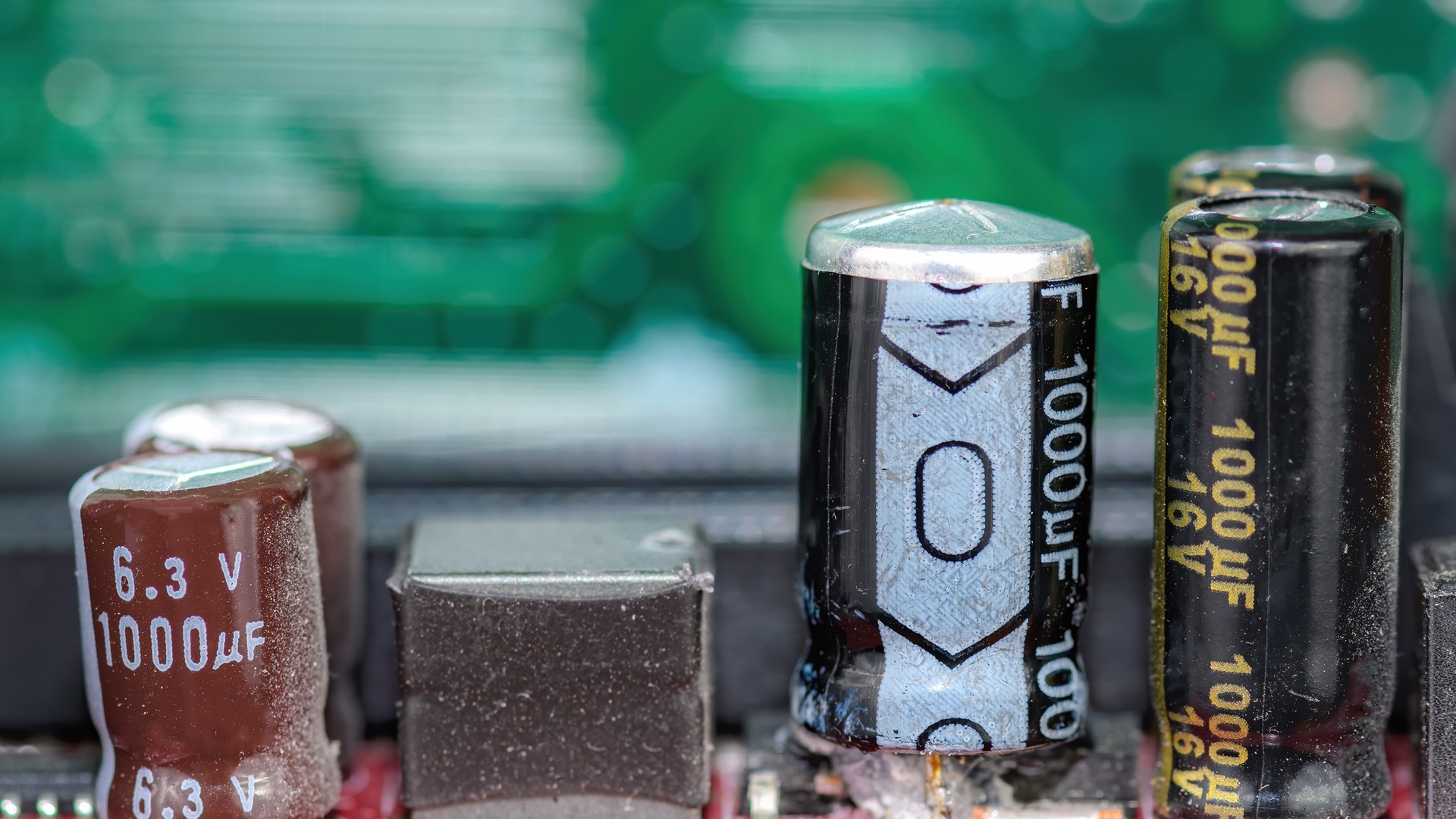
Tantalum capacitors are essential components in electronic circuits, known for their high capacitance per volume and stable electrical properties. The construction of tantalum polymer capacitors involves several intricate steps, each contributing to the final product’s performance and reliability. Below is a detailed overview of the construction process, highlighting key stages and their significance.
The construction process begins with the preparation of tantalum powder, characterized by agglomerates, bundles of powder particles typically measuring 5-10 µm, composed of individual particles that range from 0.1 to 1 µm. The tantalum powder is coated with an organic binder that facilitates powder flow during pressing and provides lubrication to ensure uniformity in the compacted form.
Once the tantalum powder is prepared, it is pressed into a porous slug. This pressing is followed by a two-step heating process: first, the powder is heated in a vacuum at temperatures exceeding 200°C to decompose the organic binder. Then, it is sintered at approximately 1,600°C. Sintering allows individual powder particles to bond while maintaining the slug’s porosity and internal surface area, which are critical to the capacitor’s performance.
The sintered tantalum slugs are then subjected to electrolytic anodization, a crucial step that forms a tantalum pentoxide dielectric layer on the tantalum surface. The slugs are immersed in an electrolyte, and tantalum ions migrate to form a dielectric film, which grows in thickness proportional to the applied formation voltage—typically around 20 angstroms per volt. The formation voltage is significantly higher than the rated voltage of the capacitor, allowing for a robust dielectric layer. However, excessive formation voltage can reduce the available tantalum metal, negatively impacting the capacitor’s surface area and capacitance.
After the dielectric formation, the tantalum slugs are impregnated with a conductive polymer. This polymer creates a uniform, highly conductive layer on the internal surfaces of the slug and also forms a dense outer layer. While the outer polymer layer introduces some equivalent series resistance (ESR), it serves an essential role in mechanically protecting the delicate dielectric layer beneath.
Following polymer impregnation, the tantalum slugs receive a carbon layer and a conductive silver paint coating. The carbon layer serves as an interface between the polymer and the silver paint, enabling reliable electrical contact. At this stage, the capacitor elements are fully functional and undergo initial electrical testing to ensure quality before further processing.
The next step involves assembling the capacitor elements onto a metal leadframe designed to optimize manufacturing efficiency. Small dollops of conductive silver adhesive are applied to the leadframe’s surface, which will later cure to form low-resistance connections between the leadframe and the capacitor elements. The leadframe enables simultaneous processing of multiple capacitors, improving overall production efficiency.
Capacitor elements are then connected to the leadframe: the anode wire is welded to the leadframe, establishing a positive connection, while the silver adhesive cures to form a conductive layer for the negative connection. The curing process involves heating the adhesive to promote cross-linking of the epoxy binder, which draws silver particles together to ensure a strong electrical connection.
Once the connections are made, the assembled capacitor elements are encased in a protective epoxy molded around each component. This epoxy casing is crucial for protecting the internal components and ensuring the capacitors remain intact during operation. Laser marking is applied to identify each capacitor, facilitating tracking and quality assurance.
After encapsulation, the capacitors undergo aging and electrical testing to confirm their performance meets specifications. Any substandard capacitors are removed during this process to prevent them from reaching customers. Finally, the surviving capacitors are cut from the leadframe, and their terminals are trimmed and bent for compatibility with automated placement on circuit boards. They are then packaged in standardized plastic carrier tape, which allows for efficient transport and handling during assembly into electronic devices.
The construction of tantalum capacitors is a meticulous process that combines advanced materials and precise engineering techniques to produce high-quality electronic components. Each stage, from powder preparation to final testing, plays a vital role in ensuring the capacitors perform reliably in various applications. As technology advances, innovations in tantalum capacitor construction continue to enhance their performance and usability in the rapidly evolving electronics landscape.
Reference: