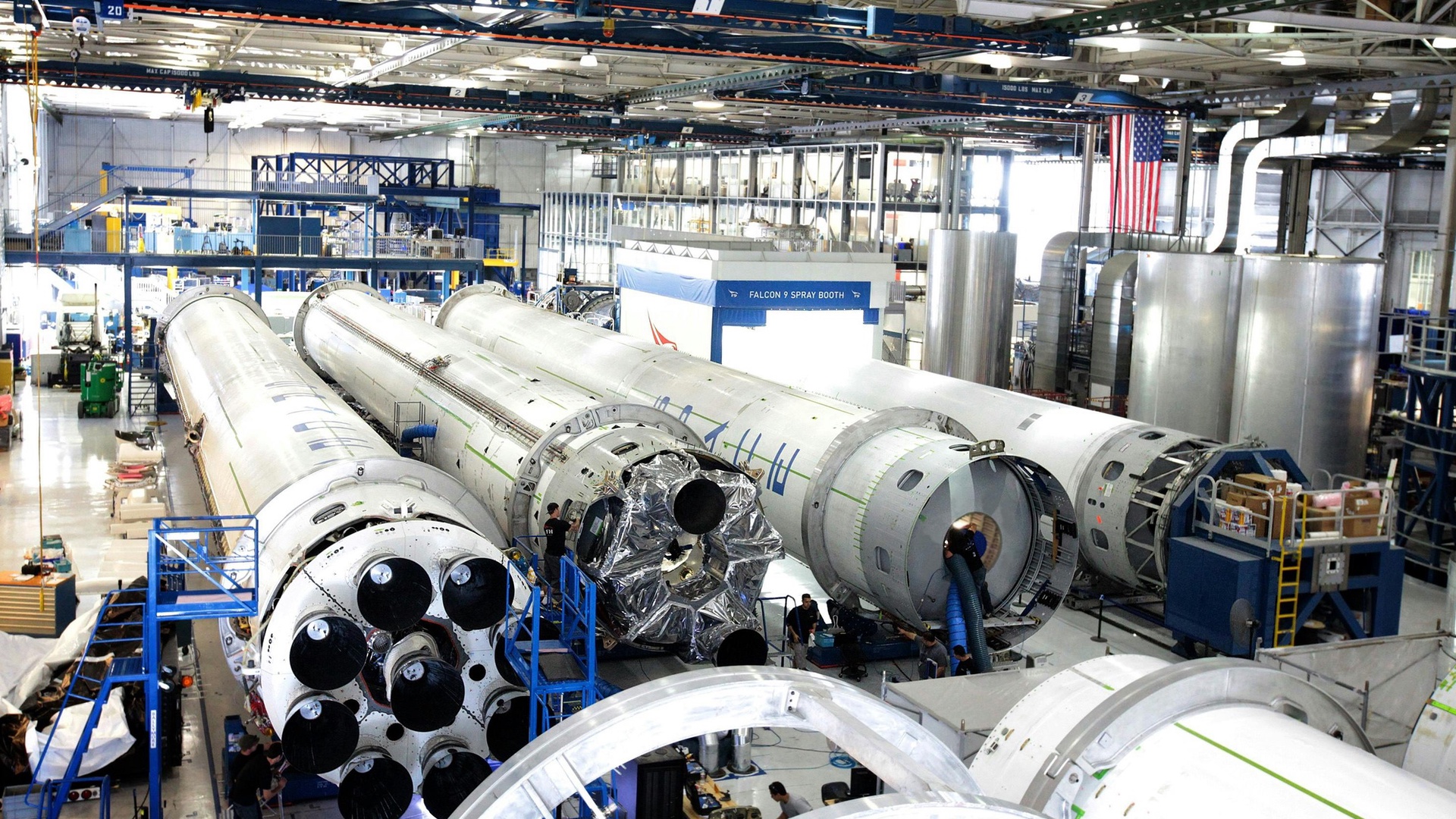
Titanium is a highly valued material due to its unique combination of properties, including light weight, high strength, metallic luster, and resilience in extreme temperatures and corrosive environments. This makes it indispensable in industries such as aerospace, where it is used in critical components, including rocket engines, nozzles, satellite casings, and manned spacecraft cabins. Beyond aerospace, titanium’s utility extends to various fields, contributing to the production of specialized alloys, coatings, plastics, paper, chemical fibers, and other industrial products.
The rising demand for titanium in both defense and civilian sectors has driven its price above $10 per kilogram, reflecting its strategic importance. However, titanium is not easily accessible. It is dispersed throughout the Earth’s crust, making extraction challenging. Furthermore, the recycling rate of titanium is quite low, with less than 20% of secondary titanium resources effectively recycled, while most are discarded.
Addressing this wasteful gap in the utilization of titanium resources is crucial, yet few comprehensive reviews exist on recycling and recovery processes for secondary titanium resources. This paper addresses this gap by examining the current distribution of titanium resources, market supply and demand dynamics, and the pressing need for recovery. It then explores technological advancements in extracting titanium from various materials and secondary slag, comparing different recovery methods. The discussion concludes with insights into future directions for titanium recovery processes, aimed at enhancing resource utilization and sustainability in this strategic sector.
Titanium resources are concentrated globally but are unevenly distributed, with Australia holding the largest reserves, followed by China, India, South Africa, and other countries. These top 13 countries collectively contain approximately 97% of the world’s titanium reserves. Ilmenite and rutile are the primary sources of titanium, with ilmenite mainly found in China, Australia, India, South Africa, and Brazil. In contrast, rutile is concentrated in Australia, South Africa, India, and Sierra Leone. According to the United States Geological Survey, global titanium ore reserves exceed 2 billion metric tons, including around 700 million metric tons of confirmed ilmenite resources and 49 million metric tons of rutile. These resources are distributed across more than 30 countries, excluding Antarctica.

In terms of production, China, Australia, Canada, Mozambique, South Africa, and India are the leading producers of ilmenite and rutile. In 2019, global ilmenite production was approximately 7.02 million metric tons (on a TiO₂ basis). After a peak in 2013, ilmenite production has fluctuated due to economic factors, with a general trend of gradual increase. By 2021, global titanium ore production rose to 8.27 million metric tons, a 3.9% increase from the previous year, while rutile production reached 621,000 metric tons, up 4%. Additionally, 1.312 million metric tons of other titanium-rich materials, including titanium slag and artificial rutile, were produced globally.
China ranks first globally in titanium reserves, with around 64% of the world’s mined reserves and 48% of total reserves, distributed across 142 deposits in 20 provinces. The country’s titanium resources are predominantly ilmenite, with primary production areas in Sichuan, Hebei, Hainan, Hubei, Guangdong, Guangxi, Shaanxi, Shandong, Shanxi, and Henan. Ilmenite makes up 98% of China’s titanium reserves, with only 2% comprising rutile. Industrial titanium deposits in China include primary and secondary ore, with primary vanadium titanomagnetite as the main industrial type. Primary ore accounts for 97% of ilmenite resources, while placer deposits account for only 3%. Low-grade primary ore dominates China’s rutile resources, constituting 86% of rutile reserves, with the remaining 14% being placer resources.
Data from the China Non-Ferrous Metal Industry Association’s branch on titanium, zirconium, and hafnium show that China’s titanium production saw significant growth in recent years. In 2021, plate production increased by 21.7%, making up 51.6% of total production. Bar, pipe, and forgings production increased by 60.6%, 62.3%, and 54.6%, respectively, while wire and casting production declined slightly. Despite having many titanium producers, China’s output and quality levels remain insufficient to meet domestic demand for high-quality titanium, necessitating significant imports from Australia and other countries.
Titanium processing generates three primary products: titanium dioxide, titanium sponge, and titanium ingots. Titanium dioxide serves as a crucial raw material across various industries, including paint, ink, plastic, pulp, rubber, chemical fiber, pharmaceuticals, and food. Titanium sponge is essential for aerospace, biomedical applications, and more, while titanium ingots are widely used in part processing industries.
The titanium industry chain extends across several sectors. Globally, around 46% of titanium concentrate is used in aerospace applications, primarily for producing titanium materials such as plates, rods, tubes, and wires, which are further processed into titanium alloys and ingots. About 43% of titanium concentrate is transformed into titanium dioxide for industrial uses, such as coatings, plastics, and papers. Emerging technologies such as powder metallurgy and 3D printing use roughly 2% of the titanium concentrate, while military applications consume around 9%. Only four countries—the United States, Russia, Japan, and China—possess the full technological capability to produce titanium through a complete industrial chain.
According to the United States Geological Survey, titanium prices have risen from 2018 to 2021. For example, ilmenite imported from China saw a notable price increase, rising from $170 to $275 per metric ton, a 61.7% increase. This rise in raw material costs has also led to higher production costs for midstream and downstream enterprises, especially since titanium and titanium alloys remain more costly than materials such as aluminum alloys or alloy steel. Limited production further constrains market supply and the speed at which titanium applications can expand.
Currently, only about 20% of titanium is recycled from its end-of-life products. Effective recycling can significantly reduce industrial manufacturing costs, particularly by sorting materials based on their residual characteristics to streamline recycling. Globally, titanium slag (with 80-95% TiO₂ content) is priced at $955-$1100 per metric ton. With advancements in recycling technology, more companies are actively working to reduce costs by recycling titanium resources. Recycling secondary titanium not only conserves resources but also benefits the environment, showing significant potential for sustainable growth in the titanium industry.
Titanium resources are divided into primary and secondary categories. Primary resources include rutile, ilmenite, titanomagnetite, anatase, white titanium ore, and perovskite. Secondary resources consist of by-products and waste from various titanium production processes, such as sponge titanium and titanium ingot production, titanium dioxide production, red mud, titanium-bearing blast furnace slag, spent SCR catalyst, and lithium titanate waste.
Wastes from iron and steel production are also considered secondary titanium resources, though they often contain impurities such as oxygen (O) and iron (Fe). Titanium waste with low O and Fe levels is typically remelted for recovery, while high O and Fe waste is often repurposed as ferrotitanium in the steel industry. Unlike primary resources, secondary titanium resources primarily come from metallurgical slag, waste alloys, spent catalysts, and used batteries. Unfortunately, over 80% of these secondary resources are discarded, resulting in both resource wastage and environmental damage. Expanding secondary resource recycling is therefore crucial for sustainability and environmental protection in the titanium industry.