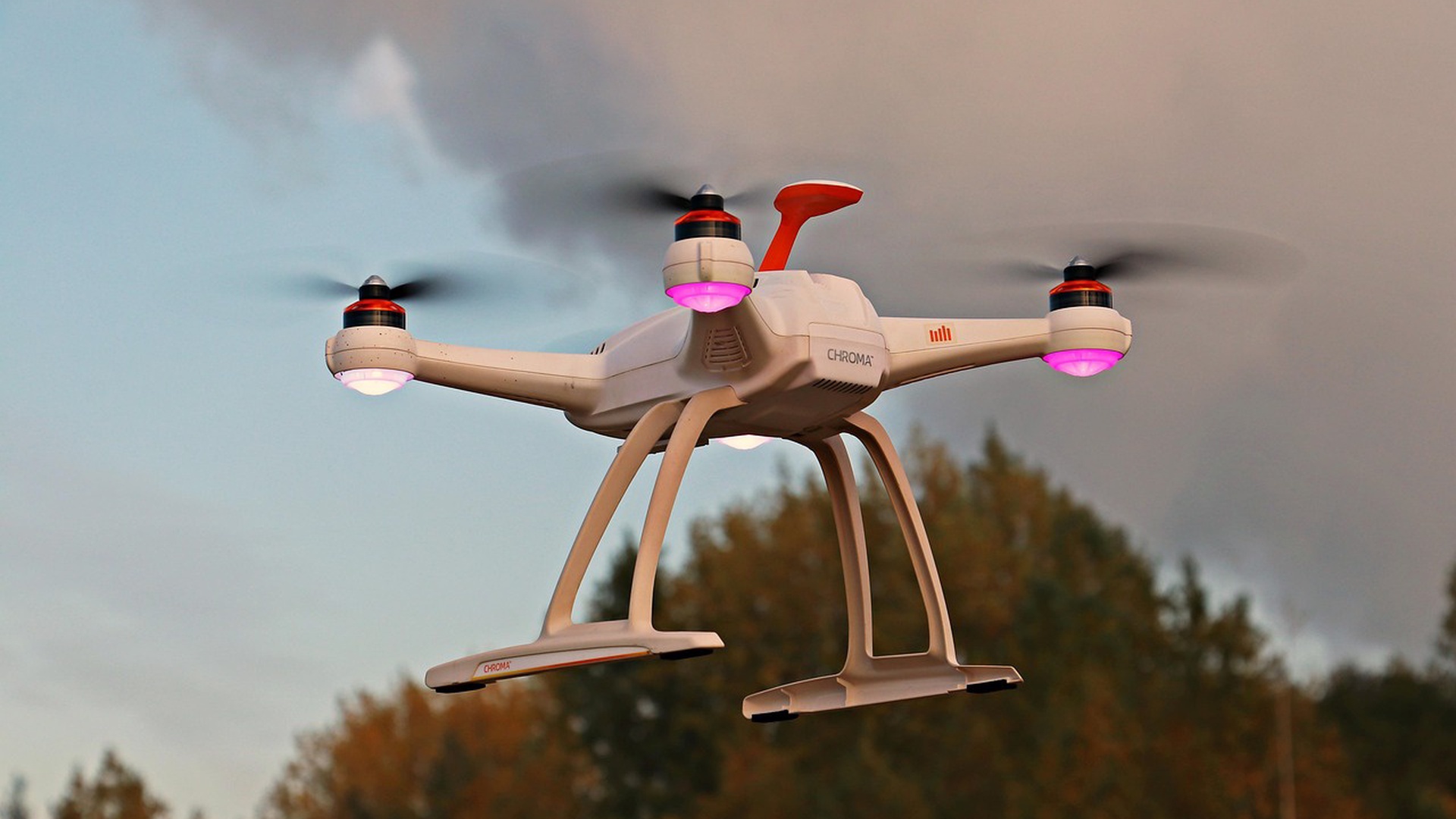
The battlefield in Ukraine has become both a proving ground for modern drone warfare and a high-stakes laboratory for the future of military resource consumption. What began with the widespread use of low-cost, radio-controlled quadcopters and first-person view (FPV) drones has evolved into a strategic collision between technology and materials science. At the heart of this transformation is the fiber-optic tether, a seemingly unassuming strand of glass that is reshaping both the electromagnetic battlefield and the geopolitical market for the critical element Germanium.
In the early stages of the Ukraine conflict, commercial-off-the-shelf (COTS) drones proved pivotal in providing real-time surveillance and precision strike capabilities. These unencrypted analog or Wi-Fi-guided FPV drones operated largely unimpeded. However, the growing reliance on the electromagnetic spectrum (EMS) quickly revealed its inherent fragility; Russia and Ukraine both deployed increasingly dense electronic warfare (EW) measures that rendered RF-dependent drones ineffective.
Area denial EW systems, such as Russia’s Pole-21 and R-330Zh Zhitel, began saturating key regions of the front, making it nearly impossible for conventional drone systems to maintain a connection. In addition, the RF signature of these systems allowed for rapid triangulation via Radio Direction Finding (RDF), leading to near-instant counter-battery fire against operators. The once-vital electromagnetic link became a liability. The solution? Physically bypass it.
Inspired partly by Cold War-era technologies like the tube-launched, optically-tracked, wire-guided (TOW) missile, modern engineers revisited the idea of physical control lines. The result is the fiber-optic tethered drone, a low-latency, high-bandwidth, electromagnetically silent system that fundamentally shifts how unmanned aerial vehicles (UAVs) are designed and operated.
Rather than transmitting commands wirelessly, fiber-optic drones deploy a spool of ultra-thin glass fiber as they fly, maintaining unbreakable and stealthy connectivity with the operator. This innovation debuted dramatically through systems like Russia’s “Prince Vandal of Novgorod” in mid-2024. These drones devastated Ukrainian forces, delivering precision strikes through kilometers of contested airspace without ever emitting a detectable signal.
However, this tactical breakthrough carries a heavy material cost.
The key to fiber-optic communication lies in the physics of signal transmission. Optical glass used in drone tethers is heavily doped with Germanium Dioxide (GeO₂) to achieve the necessary refractive properties. Germanium increases signal efficiency and allows the fiber to be tightly coiled and unfurled without degradation. The more extreme the tactical requirement, such as resisting battlefield stress or achieving long ranges, the more Germanium is needed.
Herein lies the dilemma: Germanium is not just rare, it is geochemically and economically fragile. Germanium is not mined directly. It is a "hitchhiker" element, a by-product of zinc smelting or isolated from the fly ash of specific types of coal combustion. This secondary production structure means supply is inelastic, raising Germanium production requires vastly ramping up zinc or coal operations, which is neither fast nor environmentally feasible.
Nearly 70-80% of the world’s refined Germanium comes from China, a dominance carefully cultivated over decades of subsidized industrial policy. Western refining capacity has withered in the face of this Chinese oversupply strategy. Today, even the small amounts produced in North America and Europe often depend on Chinese chemical intermediates like Germanium Tetrachloride (GeCl₄).
In August 2023, the true fragility of this monopoly became evident when China imposed export licensing on Germanium and Gallium compounds. Though dubbed a national security measure, the restriction functioned as geopolitical leverage against the West in the growing semiconductor tech war. Prices of Germanium tripled by early 2025. And all this occurred before the fiber-optic drone revolution.
Unlike telecom installations, where cable can be reused or recycled, drone-deployed fiber is single-use. Each flight consumes kilometers of precision-engineered optical fiber, much of it doped with Germanium. When the drone detonates or is shot down, the fiber lands in inaccessible terrain: minefields, forests, active war zones. It cannot be recovered.
In Russia, drone consumption has scaled to unprecedented levels. In August 2025 alone, China exported over 500,000 kilometers of fiber-optic cable to Russia, enough to wrap the Earth more than 12 times. Annualized, that’s over 6.3 million kilometers. Depending on the type of fiber (commercial-grade vs high-performance military-spec), this equates to between 126 kg and 633 kg of Germanium per year just for Russia.
But this isn’t just a Russian phenomenon.
The success of tethered drone systems has catalyzed a global arms race. Ukraine rapidly reverse-engineered its own fiber-linked drones. The U.S. Army, through the Defense Innovation Unit (DIU), has begun soliciting fiber-tethered systems for Pacific operations. Taiwan explicitly outlined the need for such drones in official defense planning. European defense startups are integrating spooled fiber features into attritable drone platforms. The race is no longer regional; it is worldwide.
This surge creates a new and unacknowledged form of strategic consumption: “munition-grade fiber” glass that is designed, manufactured, and burned like ammunition.
Historically, Germanium was treated as a capital: a durable component in fiber optics or lenses that lasted decades. Now, it is being consumed like bullets. This abrupt shift from long-term asset to short-term expendable good is incompatible with the existing supply chain.
Fiber-optic drones may only account for 3–5 tonnes of new demand per year, but the Germanium market at just ~200 tonnes annually is illiquid and tightly bound to political chokepoints. A new, untracked demand vector accounting for 1.5–3% of global supply is enough to elevate price volatility to national security levels.
Chinese exports make clear the emerging market bifurcation.
While China imposes de facto embargoes on Western countries, delaying or denying exports outright, it freely supplies fiber and precursor chemicals to strategic partners like Russia. In August 2025, Ukraine received just 72 miles of Chinese fiber, 4,500 times less than Russia. This is not a market failure. It is strategic discrimination.
Western military supply chains for Germanium, centered around Teck Resources in Alaska or Umicore’s recycling facilities in Belgium, are inadequate for war demands. Recycling is slow, mining is capital-intensive, and chemical conversion into fiber-grade GeCl₄ is dangerously under-resourced outside China.
To address the emerging crisis, Western planners must take decisive action. One approach is technology substitution, which involves investing in alternative fiber materials. Innovations such as hollow-core fibers or aluminum and phosphorus-based dopants have the potential to reduce dependency on germanium, although these technologies are still in their developmental stages.
Another strategy is to utilize smart engineering, particularly through the deployment of hybrid drones. These drones can operate with short tether spools, such as those extending up to 5 kilometers, allowing them to navigate around electronic warfare zones before transitioning to autonomous guidance. This method can effectively minimize the germanium usage per drone.
Moreover, it is essential to reevaluate the supply policy surrounding fiber optics. Instead of being viewed as mere telecom surplus, fiber should be recognized as a strategic munition. Therefore, national stockpiles must be built up to include tens of millions of kilometers of fiber, rather than focusing solely on raw ore.
Finally, it's important to address domestic refining issues. The bottleneck in the supply chain is not located in the mines but rather in the glassworks. To alleviate this constraint, there is an urgent need to accelerate investment in germanium tetrachloride (GeCl₄) refining capacity within North America and Europe.
The “Prince Vandal” drone has not just bypassed EW towers; it has shattered accepted doctrines of material economy in war. The quiet glass thread spooled into the soil of Eastern Europe is not just about connectivity or firepower; it is a vector of critical resource attrition.
For the first time since the introduction of gunpowder, we are witnessing a war where kill power is linked not just to engineering or tactics, but to photonics and periodic-table logistics. Germanium, the silent metal of fiber optics, is now a strategic deterrent in its own right. As EW capabilities expand and drone fleets scale, the world's ability to wage tethered war may depend as much on chemical processing as on battlefield bravery. In this war, every spool matters and every gram of Germanium may determine the edge between signal and silence, life and loss.