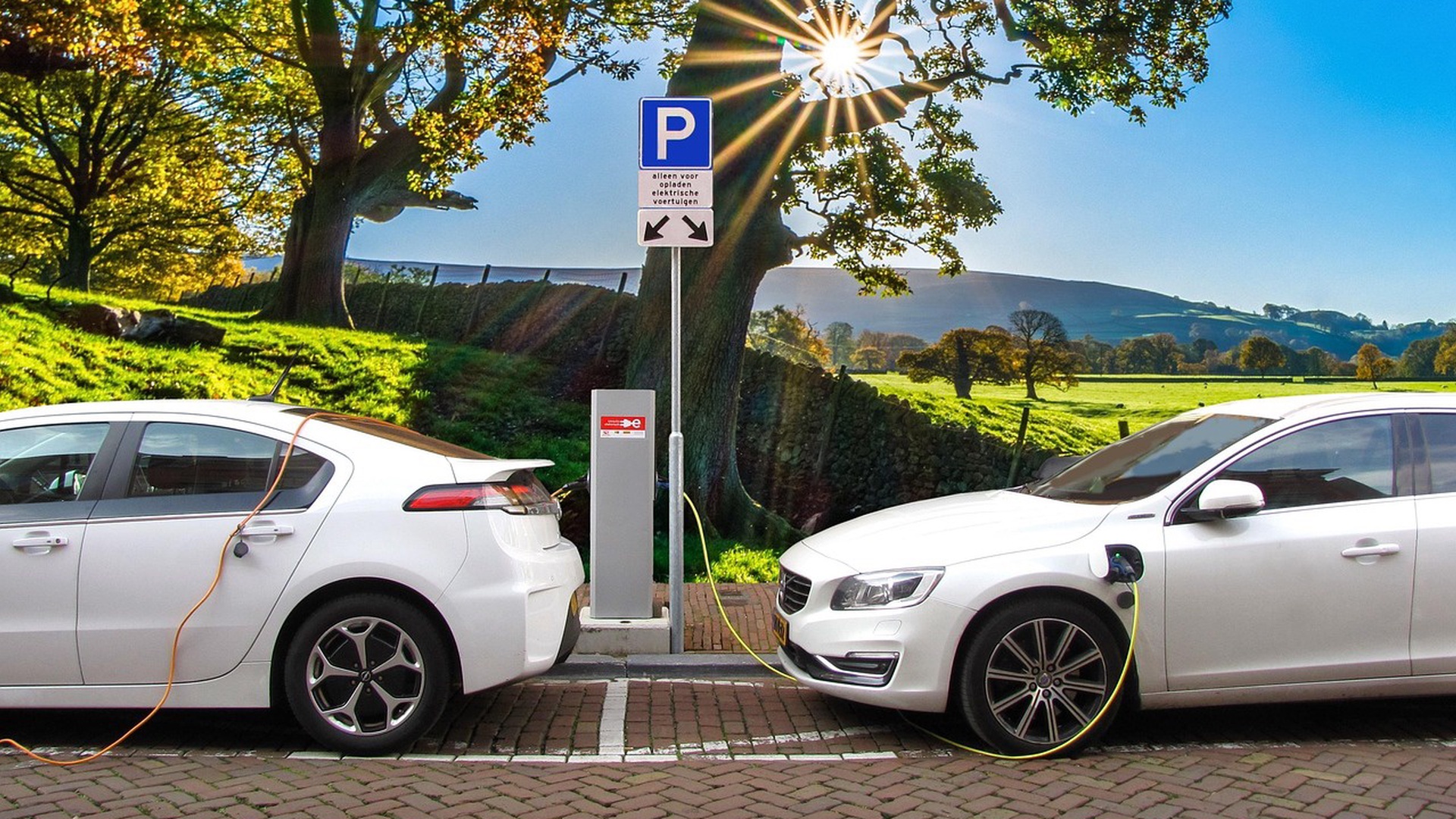
In recent years, the global adoption of electric vehicles (EVs) has grown at an unprecedented pace. Approximately 95% of all EVs have been sold in just ten countries, with Europe, China, and the United States leading this transition (Yadlapalli et al., 2022). This market boom is primarily driven by environmental concerns, advances in battery and charging technologies, and supportive government policies. Despite higher upfront costs compared to internal combustion engine (ICE) vehicles, consumer preferences are shifting toward EVs due to their lower emissions, efficiency, and reduced dependency on fossil fuels. The global EV market, valued at $500 billion in 2023, is predicted to swell to $1.89 trillion by 2032, with a compound annual growth rate of 13.8% (Fortune Business Insights, 2025). Critical to this transformation are lithium-ion batteries (LIBs), known for their high energy density, long cycle life, and scalability.
The EV revolution is fueled by lithium-ion battery technology, a system composed of a cathode, anode, electrolyte, separators, and current collectors (Jacoby, 2019). The battery operates via lithium ions migrating between the anode and cathode during discharge and charge cycles. While this technology is highly efficient, it comes with safety and environmental risks. For example, the commonly used electrolyte salt, LiPF₆, is both toxic and reactive with moisture, generating dangerous hydrofluoric acid (Campion et al., 2005; Eshetu et al., 2014). Cathode composition varies and includes materials like LiMn₂O₄ (LMO), LiCoO₂ (LCO), and Li(Ni/Mn/Co)O₂ (NMC), each containing valuable critical metals such as cobalt, nickel, and lithium. These components make up between 60-70% of a battery's total weight, highlighting the importance of effective recycling strategies (Tembo et al., 2024; Zhao et al., 2021).
Typical EV batteries operate effectively for 8-12 years, with their lifespan varying based on usage and charge/discharge cycles. Once the battery capacity drops below 80%, it is deemed unfit for EV use. However, retired batteries can still be repurposed in lower-demand energy storage systems, such as home solar energy storage. Nonetheless, the number of end-of-life EV batteries is expected to soar over 14 million waste LIBs are projected by 2040 (IEA, 2020; Bibra et al., 2021), creating both a waste challenge and an opportunity for material recovery.
EVs require up to six times more critical minerals than ICE vehicles (Zanoletti et al., 2024). Such high demand places enormous pressure on the global supply chain, particularly for cobalt, lithium, and graphite. These resources are geographically concentrated: over 70% of cobalt comes from the Democratic Republic of Congo, almost 80% of graphite is from China, and Australia dominates lithium production (Tembo et al., 2024). Given these imbalances, the concept of urban mining, recovering valuable metals from used batteries, has emerged as a sustainable alternative to traditional mining. One ton of lithium, which requires about 250 tons of ore, can be instead retrieved from just 28 tons of used batteries (Harper et al., 2019).
Recycling efforts primarily focus on reclaiming valuable metals using two mature techniques, pyrometallurgy and hydrometallurgy. Pyrometallurgy involves high-temperature processes to recover metals, but it is energy-intensive, has low yield, and is environmentally taxing. In contrast, hydrometallurgy operates at lower temperatures and offers higher recovery rates, including lithium, making it more favorable from an environmental and efficiency standpoint.
In response to tighter regulations such as the European Union's mandate to recover 80% of lithium and up to 95% of cobalt, copper, and nickel by 2031, recycling technologies are shifting from pyrometallurgy toward hydrometallurgy, or a blend of both.
Emerging technologies aim to create more sustainable and economically viable solutions. Solvometallurgy, for instance, uses deep eutectic solvents (DES) for metal extraction and has shown promise due to its low toxicity, high efficiency, and reduced waste. Biometallurgy, although environmentally friendly, faces scalability challenges due to slow kinetics and microbial cultivation issues.
Direct recycling, also known as cathode-to-cathode recycling, offers the fastest, lowest-cost path of recycling by retaining and reactivating the original cathode material. Though still in early development, its closed-loop approach can significantly reduce costs and energy use. However, its effectiveness is limited to single-chemistry waste streams and remains scale-restricted.
Emerging interest also surrounds the recovery of graphite, representing over 20% of battery mass and electrolyte salts like LiPF₆. Techniques such as mechanical separation for graphite and solvent extraction for electrolyte salts show potential but require further refinement to eliminate metal contaminants and toxic by-products.
Newer battery chemistries are becoming less valuable from a recycling perspective. For example, a shift towards LFP (lithium iron phosphate) batteries free from cobalt and nickel reduces the economic incentive to recycle due to lowered recoverable value. LFP batteries comprised 40% of the EV market in 2023, particularly after being adopted in Tesla's Model 3 and Y.
Another challenge is the limited supply of waste batteries due to their long operational life. Most recycling feedstock today comes from battery manufacturing scrap, which comprises 60-70% of the input in some South Korean recycling plants. As EV use continues and battery manufacturers scale production, scrap rates and consequently feedstock availability are expected to increase.
To address these challenges, governments are enacting policies aimed at promoting battery standardization, traceability, and producer responsibility. China, the EU, Japan, and the US have all instituted extended producer responsibility. China's digital traceability system and the EU's battery passport mandate enhance transparency and recycling efficiency. With restrictions on LIB waste exports becoming broader, countries are compelled to develop their own recycling ecosystems.
The rise of EVs brings with it a dual challenge: ensuring a sustainable supply of critical metals and managing an ever-growing volume of battery waste. Recycling and reuse are not only environmental necessities but have increasingly become economic imperatives. As technologies evolve, shifting toward more green, efficient, and closed-loop systems, the foundation for a circular economy within the EV sector becomes more robust. With proactive policies, strategic investments in innovation, and global collaboration, EV battery recycling can become a key pillar in achieving both environmental sustainability and energy security. Only then can we fully realize the promise of the electric vehicle revolution, not just as a cleaner transport solution, but as a catalyst for circular economy transformation.