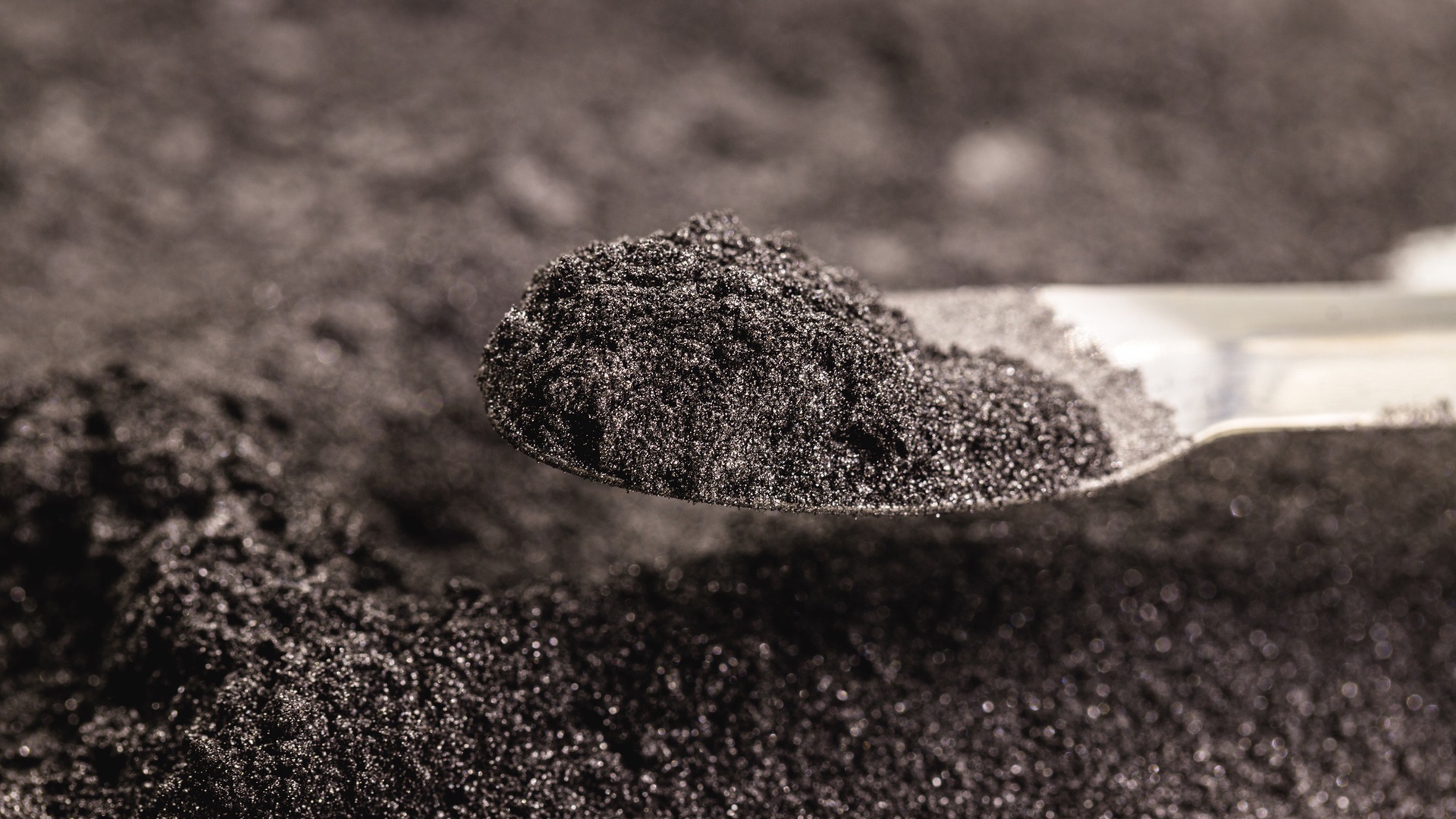
In the geoeconomics of the twenty-first century, control over critical minerals has shifted from a matter of commercial efficiency to one of acute national security. Nowhere is this shift more evident than in the tungsten market of 2026. Tungsten is exceptionally dense, heat-resistant, and harder than any metal. When synthesized into carbide, it is irreplaceable in cutting tools, semiconductors, aerospace alloys, and defense systems ranging from Patriot missiles to armor-piercing munitions. China controls roughly 80 percent of global mine supply and an even larger share of processing capacity, and in late 2025 it chose to weaponize that dominance against Japan. The gambit has backfired spectacularly, catalyzing precisely the global decoupling Beijing sought to prevent.
The crisis stemmed from a diplomatic rupture. In November 2025, Japanese Prime Minister Sanae Takaichi publicly suggested possible Japanese military involvement in a Taiwan contingency. When she refused to retract the remarks, Beijing retaliated across tourism, seafood, and critical minerals, deploying an export control architecture it had built incrementally since the 2020 Export Control Law. Having already replaced quotas with case-by-case licensing in February 2025 and restricted export privileges to just fifteen state-approved firms in December, China's Ministry of Commerce prohibited dual-use tungsten exports to Japanese military-linked end-users in early 2026.
The results were drastic. Between February and April 2026, Chinese exports of tungsten powder and tungsten carbide to Japan fell to literally zero, the first complete multi-month halt since tracking began in 2015. Japan's overall imports of Chinese tungsten products in April dropped 50 percent from the 2025 monthly average and 63 percent year-on-year. Exports of dysprosium and terbium, essential for Japanese high-performance magnets, also fell to zero. Executives described Beijing's approach as keeping the market "neither alive nor dead," supplying just enough globally to protect Chinese subcontractors while choking specific adversaries.
China's dominance in processing ore into ammonium paratungstate (APT), the traded intermediate, created a supply vacuum that sent prices to record highs. European APT jumped more than 40 percent, reaching $1,100–1,150 per metric tonne by January 2026, and at the peak, prices for some critical minerals in Europe ran six times higher than in China's domestic market.
Japanese manufacturers, which had sourced roughly 30 percent of raw tungsten from China, absorbed the blow directly. Sumitomo Electric's president confirmed in May 2026 that "procurement from China has completely stopped," and the company raised cutting-tool prices by up to 60 percent. Mitsubishi Materials more than tripled prices for certain cemented-carbide materials from June 2026, pushing costs through the automotive and aerospace sectors. The strain even bred illicit activity: China detained two Japanese nationals in May 2026 on tungsten-smuggling suspicions.
The blockade's fatal flaw was that it permanently changed Japan's risk calculus. Chinese tungsten had been commercially unbeatable, but the embargo proved that political risk could halt assembly lines overnight. Rather than lobbying for diplomatic capitulation, Japanese industry moved to decouple. Manufacturers pivoted to secondary markets. U.S. tungsten scrap exports to Japan surged twenty-fourfold in the first quarter of 2026, briefly making America Japan's largest supplier before Singapore and European recyclers took over the role. More enduringly, corporations poured capital into closed-loop recycling: Sumitomo Electric committed $100 million to a domestic recycling facility targeting a 50 percent increase in independent supply capacity by 2028, while Mitsubishi Materials invested $64 million to expand recycling at H.C. Starck in Europe and Akita in Japan, aiming to process 20,000 tons of scrap by 2027.
The state underwrote the transition. Under the Economic Security Promotion Act, Tokyo designated tungsten a "specified critical product," subsidizing corporate supply-security plans and de-risking investment in non-Chinese processing. JOGMEC, its mandate expanded, mobilized stockpiling and overseas investment support, while Japan joined a G7 pledge to cap reliance on any single country for critical minerals at 60 percent by 2030.
The crisis accelerated a global race to build non-Chinese supply. Vietnam, already the world's second-largest producer through Masan High-Tech Materials' Nui Phao mine, emerged as the most vital alternative node, one of the only jurisdictions outside China capable of producing high-purity APT and tungsten oxides. In mid-2026, Masan announced an expansion unlocking 115 million tons of polymetallic resources, courted Japanese, Western, and Korean investors with long-term offtake agreements, and partnered with South Korea's GB Innovation to supply semiconductor-grade APT.
In South Korea, Almonty Industries' revitalized Sangdong mine, capable of eventually supplying up to half the world's non-Chinese tungsten, began operations and stockpiled $68 million in ore, backed by Seoul's supply chain legislation and the trilateral U.S.–Japan–Korea critical minerals partnership. The United States, which has depended entirely on imports since 2015, used the Defense Production Act to fund domestic projects, including a $6.2 million award for the Pilot Mountain project in Nevada, and it also imposed a legal ban on Chinese, Russian, Iranian, and North Korean tungsten in key defense applications starting in January 2027.
Trade data shows that these controls have harmed China's own industry. Total exports of Chinese tungsten smelting products fell 27.6 percent year-on-year in early 2026, with tungsten powder exports plunging 61.2 percent and APT exports hitting zero, as licensing bureaucracy and volatile price gaps paralyzed exporters. More striking was the import paradox: China's imports of tungsten concentrate surged 153.7 percent, and the country recorded a net import of 1,363 tonnes of tungsten metal, a stark reversal from net exports a year earlier. Squeezed by mining quota cuts and declining ore grades, Chinese processors were forced to buy on the international market at prices their policies had inflated. Imports from Vietnam alone rose 1,092 percent, meaning Beijing was effectively subsidizing the very foreign competitors positioned to dethrone it.
The 2026 tungsten crisis is a definitive case study in the limits of weaponized interdependence. China's coercion failed to alter Japan's position on Taiwan; instead, it transformed dependence on Chinese supply from a commercial calculation into an intolerable security vulnerability, activated Japan's full economic security apparatus, and directed massive capital toward Vietnam, South Korea, and the United States. Even if Beijing now floods the market with cheap tungsten, firms that have committed hundreds of millions of dollars to closed-loop recycling and alternative supply chains are unlikely to return. Meanwhile, China's own processors have lost revenue, market share, and feedstock security. The lesson is stark: when acute political risk enters an advanced supply chain, industrialized economies will pay whatever premium is required to engineer resilient alternatives, and China's once-unassailable leverage over tungsten is now in turmoil.