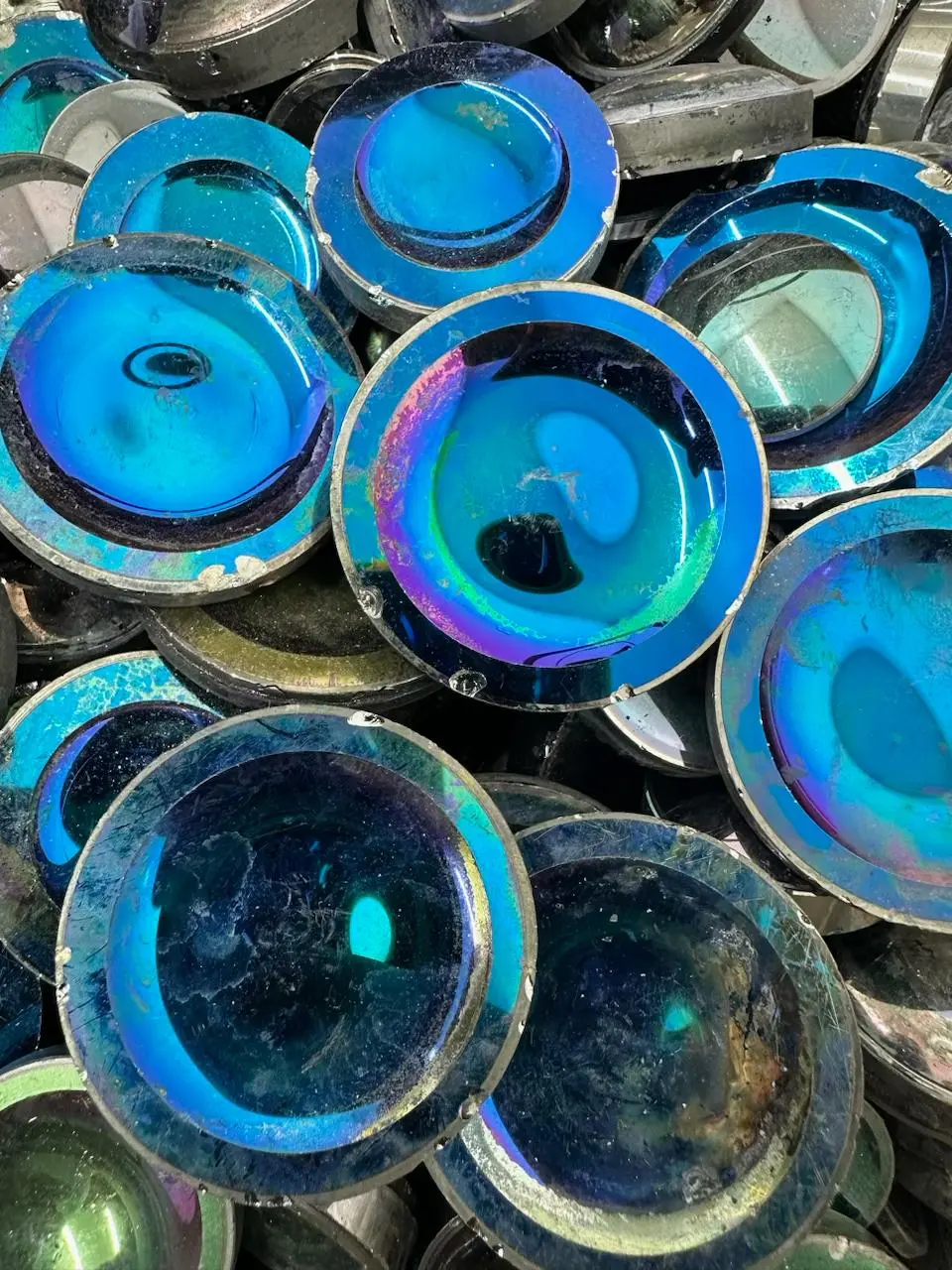
Germanium rarely attracts attention outside specialized industries. Recovered chiefly as a byproduct of zinc processing and coal ash, it is used in fiber-optic cables, infrared lenses, and satellite solar cells. Yet its modest profile conceals a major supply-chain vulnerability: China dominates primary production and refining. Since 2023, Beijing has used that position to turn a small industrial market into a test of how export controls can reshape global trade.
The squeeze began in August 2023, when China required licenses for exports of germanium metal and several related products. Licensing did not amount to a universal ban, but it gave officials discretion over which shipments could leave the country and required exporters to identify buyers and intended uses. In December 2024, Beijing went further, declaring exports of germanium and several other controlled materials to U.S. recipients "in principle not permitted" and separately prohibiting dual-use exports for U.S. military uses. China temporarily suspended the broader U.S.-specific restriction in November 2025 but left the general licensing system and military prohibition in place. It subsequently imposed restrictions tied to Japanese military capabilities and stepped up enforcement against suspected misdeclaration and transshipment. The result is a market governed less by ordinary purchasing decisions than by permission, destination, and end use. A buyer outside China may be willing to pay a high price and still be unable to secure material on a dependable schedule.
China's leverage comes from how it produces germanium. It is rarely mined on its own; recovering it requires equipment and expertise attached to other industrial processes. That makes it difficult to increase supply quickly when prices rise. Estimates of China's share differ according to whether they count recycled material or intermediate products, but S&P Global's October 2026 estimate puts its share of global primary germanium metal production at about 91%. For buyers seeking a reliable non-Chinese source, the distinction between material that exists in the ground and material that can be refined at scale is decisive. The contraction in international trade has been stark. According to the figures assembled for this article, Chinese monthly germanium exports averaged about 823 kilograms from early 2025 through mid-2026, down roughly 77% from the 2022 average of 3,640 kilograms. U.S. imports of germanium metal fell from an estimated 21 metric tons in 2024 to 7 tons in 2025. Shipments also became erratic: a month of substantial exports could be followed by one with almost none. For manufacturers planning production months in advance, that volatility can be as damaging as a sustained reduction.
Prices reveal another fracture. While restricted export channels left more material inside China, buyers in Europe faced a much thinner spot market—the material available for immediate purchase rather than under long-term contract. By July 2026, Fastmarkets' assessed European price for high-purity germanium metal had reached $10,000–$12,750 per kilogram, several times its mid-2023 level. Reported Chinese domestic prices were far lower. Those benchmarks do not represent the price of every industrial contract. Still, the gap shows what export controls have done: germanium in China and germanium accessible to Western buyers have become increasingly different markets. That does not mean worldwide use of the metal is falling. S&P Global projects total consumption rising from 343 metric tons in 2025 to 408 tons by 2030. The internationally traded, non-Chinese supply pool is mainly squeezing the market, along with commercial uses that are least able to absorb higher costs.
Those uses are beginning to adapt. PET plastic manufacturers have alternatives to germanium-based catalysts. Solder makers are researching formulations that use less germanium or none at all. Producers of commercial infrared lenses have greater incentive to switch to other optical materials, including chalcogenide glass. Such substitutions take time and may sacrifice performance, but prolonged high prices can make the redesign worthwhile. If manufacturers permanently change their processes, some demand will not return even if export restrictions ease. Other buyers have much less room to retreat. Germanium compounds help make conventional optical-fiber cores; in a large AI data center project, the metal's cost may be small beside the value of the network. Defense contractors need infrared optics for thermal sights and guidance systems, while space-solar-cell makers rely on specialized germanium wafers. These buyers can keep bidding when lower-margin users cannot. China's controls have therefore not simply reduced supply: they have helped reallocate scarce accessible material toward applications with the deepest budgets or the fewest substitutes.
Governments and companies are trying to build alternatives. Projects in Belgium and the Democratic Republic of Congo, proposed expansion at Canada's Trail smelter, U.S. refining and recycling investments, and a planned rebuild of Tennessee's Clarksville smelter could all strengthen supply outside China. None offers an immediate cure. Germanium recovery depends on suitable zinc feedstock, specialized processing capacity, and financing. Recycling helps, but scrap availability and purity requirements limit how much new demand it can cover. A near-term test comes on November 27, 2026, when China's stated suspension of its broader U.S.-specific export restriction is scheduled to expire. As of the November 19 date in the supplied account, no formal extension had been published. Should the suspension lapse, renewed restrictions could be imposed on U.S. commercial buyers. If it is extended, they will still need licenses, and the prohibition on U.S. military uses will remain.
Either outcome leaves the larger change intact. Beijing has shown that control over refining and export approvals can divide a global byproduct market into a relatively accessible domestic pool and a scarce, expensive international one. Until alternative processing capacity reaches a meaningful scale, the world outside China will have to decide which uses of germanium it can afford to preserve—and which it must learn to do without. Secure your germanium supply. With international availability tight and prices volatile, buyers should plan their purchases carefully. Quest Metals has germanium available for sale. Visit Quest Metals to discuss current inventory, specifications, pricing, and delivery options.