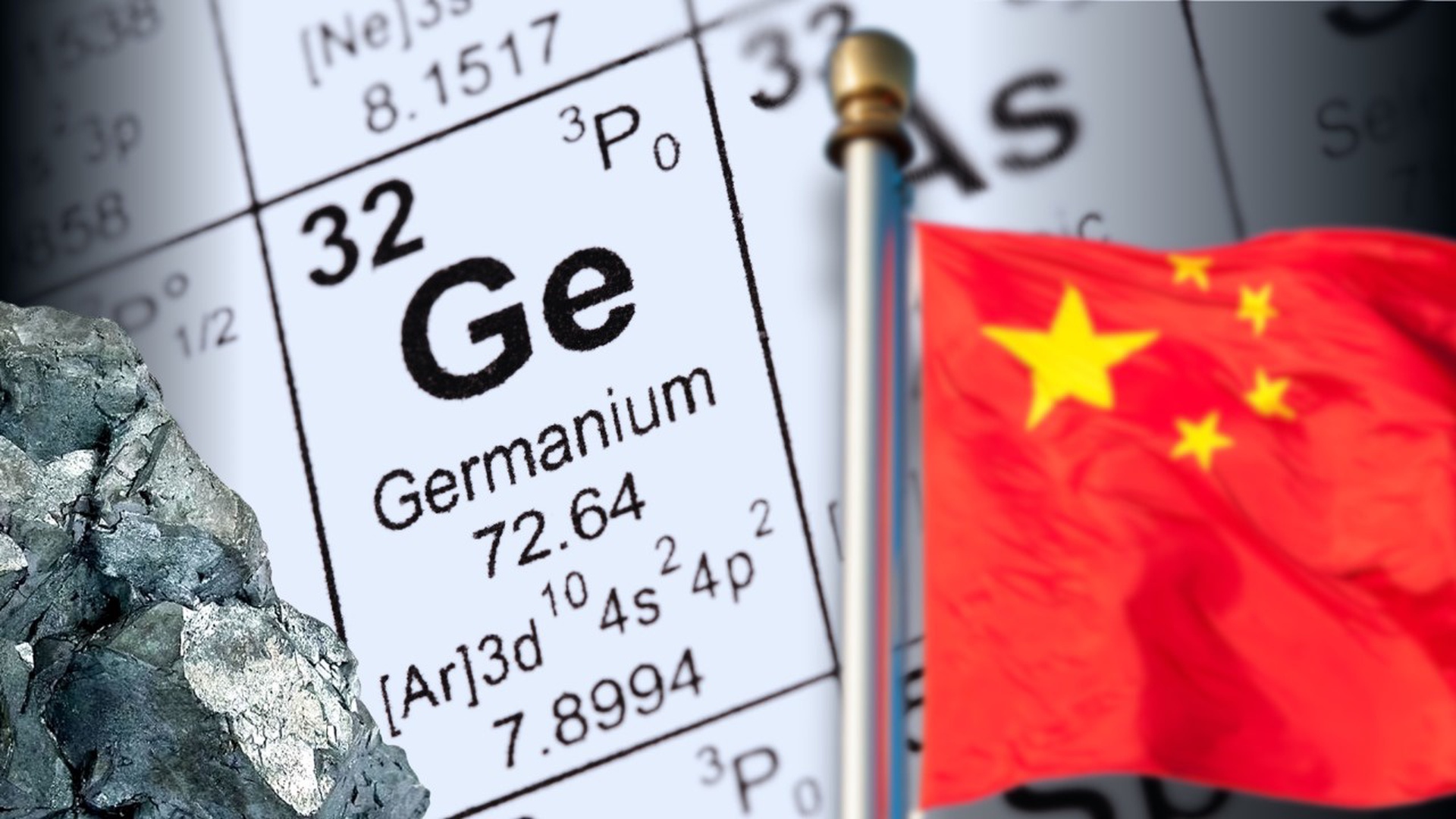
China’s role as a major supplier of critical minerals, such as gallium and germanium, has significant implications for the global economy, particularly for countries like the United States, which depend heavily on these minerals for industries including telecommunications, electronics, aerospace, and defense. The potential disruption to China’s exports of these minerals could have far-reaching consequences for U.S. economic performance, particularly for GDP, industrial output, and price stability. This analysis explores the potential effects of China’s export restrictions on gallium and germanium on the U.S. economy, using insights from sensitivity analyses and modeling exercises.
A key feature of this analysis is a sensitivity analysis that simulates restrictions on China’s net exports of gallium and germanium, ranging from 0% to 100%. The analysis focuses on several key outcomes: equilibrium quantities, prices, and U.S. Gross Domestic Product (GDP).
The sensitivity analysis also highlights a critical threshold in these restrictions. For gallium, the U.S. economy begins to feel significant pressure when China restricts exports by just over 41%. Beyond this point, the supply curve shifts markedly, leading to larger price increases and greater reductions in supply, which in turn result in a more substantial negative impact on U.S. GDP. Similarly, germanium’s impact on U.S. GDP becomes more substantial, accounting for 94.1% of China’s export restrictions.
The model finds that the reduction in available mineral quantities has a greater impact on U.S. GDP than the price increase from export restrictions. For gallium, price increases contribute only 6.1% to the decrease in U.S. GDP under full export restrictions, with a slightly higher contribution (12-16%) under lower levels of restriction. This suggests that decreased availability of gallium and germanium (rather than just rising prices) is the primary driver of the economic downturn. The value of industries that rely on these minerals, such as semiconductors, electronics, and telecommunications, is substantially higher than the cost of raw materials, making supply loss a more significant factor than price escalation.
A simultaneous disruption of both gallium and germanium exports from China is expected to cause a decrease of U.S. GDP by $3.4 billion (with a range of $1.7 billion to $9.0 billion depending on the case). Notably, the combined effect is slightly less than the sum of individual restrictions on gallium and germanium. This is due to the interconnectedness of industries: sectors that depend on both minerals incur no additional losses when both are restricted simultaneously, because each disruption already constrains them.
Moreover, industries that use both minerals in telecommunications and electronics may experience some degree of concurrent use or substitution, reducing overall economic damage. However, the overall decrease in U.S. GDP would remain substantial, particularly if industries are unable to develop viable substitutes for these critical materials.
The potential effects of China’s export restrictions on gallium and germanium would likely cause significant economic disruption in the U.S., particularly for industries reliant on these critical materials. While price increases are a contributing factor, the more substantial impact stems from the reduced availability of these minerals, which could lead to significant reductions in industrial output and GDP. The interconnected nature of the affected industries and the possibility of adapting to these disruptions over time offer avenues for mitigation. However, as the model highlights, proactive measures, such as expanding strategic inventories, resource recovery, and policy initiatives, are essential to mitigate the risks posed by such supply chain disruptions.