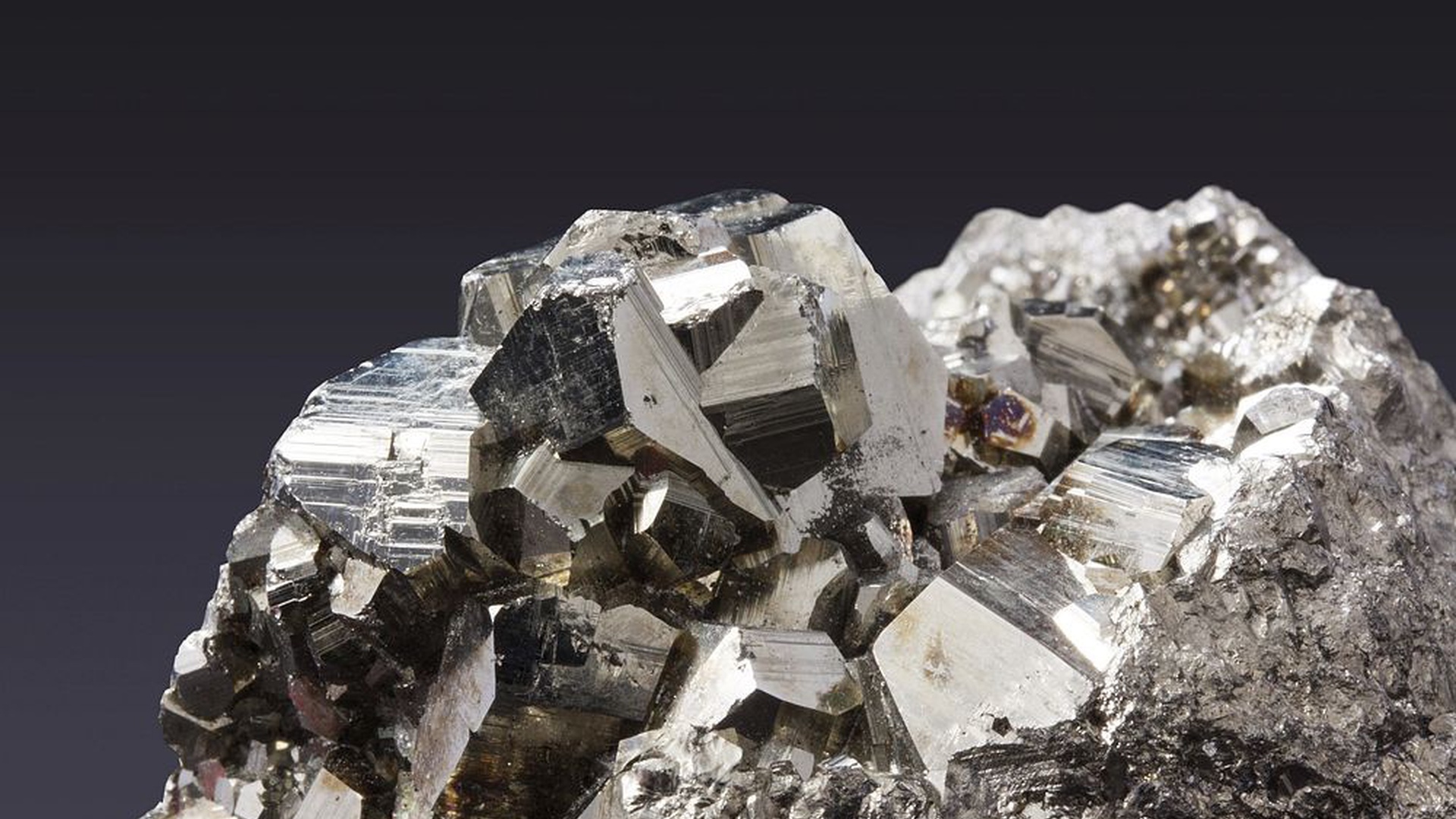
In a bold move aimed at revitalizing America's domestic mineral supply and reducing reliance on imports, particularly those from China, President Donald Trump has approved the long-delayed Ambler Road Project in Alaska. This executive decision paves the way for the development of the remote Ambler Mining District, a mineral-rich region that holds vast reserves of critical materials such as copper, cobalt, gallium, and germanium resources essential to modern technologies and U.S. national security.
The newly authorized 211-mile road will provide critical infrastructure access to this otherwise inaccessible region, enabling the exploration and eventual extraction of strategically vital minerals. Simultaneously, the U.S. government has taken a 10% equity stake in Trilogy Metals, the Canadian company spearheading mining operations in the area, with warrants to purchase an additional 7.5% a level of state involvement signaling a significant shift in how the U.S. is approaching resource security in a geopolitically volatile era.
The Ambler Mining District is considered one of the largest untapped sources for copper-zinc mineral belts globally, with deposits of silver, gold, lead, cobalt, and other critical materials essential for clean energy systems, high-tech manufacturing, and defense applications.
Copper, for instance, plays a vital role in power generation and transmission, telecommunications, and renewable energy infrastructure. It is the third-most-consumed industrial metal after iron and aluminum. Currently, the U.S. meets a significant portion of its copper needs through imports, making supply chains vulnerable to global disruptions.
Cobalt's value lies in its use in lithium-ion batteries, a key component in electric vehicles (EVs), power tools, and grid-scale energy storage systems. With over 75% of U.S. cobalt consumption reliant on imports, enhancing domestic supply is crucial for energy independence.
Gallium, nearly 100% of which is imported by the U.S., is essential in the manufacturing of semiconductors, LED lighting, and solar panels. Meanwhile, germanium, widely used in fiber optics and infrared technologies, reflects growing demand due to advancements in global communications and security applications.
These minerals form the backbone of future-facing industries, including electric vehicles, renewable energy technologies, advanced computing, and defense. China's near-monopoly on the global supply, accounting for up to 90% of rare earth minerals processing, amplifies the economic and national security implications of continuing to depend on foreign sources.
Trump’s revival of domestic projects like Ambler Road aligns with a broader “energy dominance” doctrine that focuses not only on fossil fuel exploitation but also on diversifying and securing mineral supply chains. This strategy counters that of the previous Biden administration, which had blocked the project over environmental concerns, citing the potential threat to Alaskan wildlife and indigenous communities.
Addressing those concerns remains a challenge, but the Trump administration has opted for a policy recalibration that gives priority to national needs and economic security, even at the cost of potential environmental trade-offs. The executive order also makes use of the National Energy Dominance Council and FAST-41, an expedited federal project review program to prevent bureaucratic delays, which for years stalled critical minerals projects across the country.
Recent policies have also loosened regulations previously enforced by the National Environmental Protection Act (NEPA), aiming to streamline approval times. While this deregulation accelerates projects, it also opens the administration to legal challenges, especially as courts re-evaluate regulatory agency authority following the reversal of the Chevron deference doctrine.
Alongside deregulation, the Trump administration has leaned into public-private partnerships and direct government investment into strategic sectors. The $35.6 million investment in Trilogy Metals is part of a broader trend: recent deals saw the U.S. government gain a 9.9% stake in Intel and a $400 million preferred stock investment in MP Materials, the only operational rare earth mine in the U.S. to localize production of rare earth magnets critical to defense and tech manufacturing.
Furthermore, U.S. agencies like the Department of Energy, the Export-Import Bank (EXIM), and the International Development Finance Corporation (DFC) have expanded their mandates. The DFC has begun investing in mineral initiatives globally, including the US-Ukraine Critical Minerals Fund and infrastructure projects along the Lobito Corridor in Africa. These investments exemplify how foreign policy is now being tightly integrated with critical mineral strategy.
Beyond direct investment, the Trump administration has revved up its industrial policy using tariffs as a lever. Steel, aluminum, copper, and selected rare earth elements now face increased import tariffs of up to 50%, raising the cost of imported products and creating competitive space for domestic producers.
Policies are also being formulated to apply tariffs of 15% to 30% on a broader range of semi-finished critical minerals by 2027, pending findings from the Department of Commerce. Though controversial, these measures are designed to protect emerging domestic supply chains while incentivizing companies to build refining and smelting infrastructure on U.S. soil.
Despite a favorable policy shift, several roadblocks remain for mining ventures like Ambler. The development of new mines in the U.S. faces severe labor constraints, especially for specialized roles that haven’t been in high demand since mid-20th-century mining booms. Immigration restrictions and higher inflation are exacerbating cost pressures for construction and energy-intensive operations.
Additionally, the rollback of tax incentives from the Inflation Reduction Act has dampened enthusiasm for EV production and clean energy installations. This creates demand uncertainty for key minerals like lithium, cobalt, and nickel vital to battery technologies. Mining companies dependent on private-sector demand stand at a disadvantage compared to those with government backing and guaranteed offtake agreements. Nevertheless, forward-thinking companies like Ivanhoe Electric and Orla Mining are racing to complete pre-development stages before the policy window potentially closes due to shifting political dynamics or budget impasses.
The U.S. is not only reasserting control over its internal mineral resources but also leading international diplomacy in minerals development. Agreements with Saudi Arabia, the UAE, and peace negotiations involving the Democratic Republic of Congo and Rwanda are being used to establish co-investments in critical mineral value chains. The U.S.-Ukraine Reconstruction Investment Fund underscores how mineral partnerships are becoming tools of post-conflict economic stabilization and geopolitical alignment.
Yet, these transactional mineral deals carry diplomatic risks. For instance, strained relations with governments like those of Greenland and Denmark regarding attempts to increase U.S. investment influence highlight the tightrope walk of diplomacy and resource security.
By approving the Ambler mining access road and investing directly into critical mineral projects, the Trump administration signals a definitive turn toward safeguarding U.S. economic and national security interests through resource independence.
These actions mark a major departure from decades of laissez-faire mineral policy and reflect a growing recognition of the role critical minerals play in defense, technology, and industrial resilience. While environmental and logistical challenges remain, current policies aim to fast-track the U.S. toward a future where it can mine, refine, and manufacture the materials necessary for economic dominance in a rapidly evolving global landscape. In the race for critical mineral supremacy, the stakes are high, and America is finally putting the shovel in the ground.